Analisi esperta di Matched Couple di Leonardo da Vinci
Stile: High Renaissance · Genere: caricature
Expert Analysis: "Matched Couple" by Leonardo da Vinci
Style & Genre: High Renaissance / Caricature
Significance:
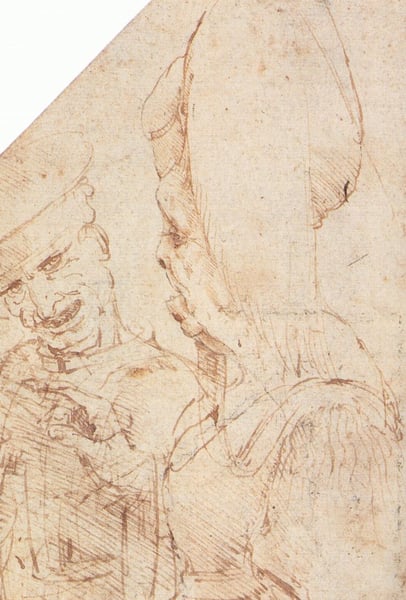
Leonardo da Vinci’s "Matched Couple" stands as a remarkable anomaly within the High Renaissance—a period celebrated for idealized beauty, balance, and naturalism. While masters like Raphael and Michelangelo sought perfect proportion and grace, Leonardo turned his keen observational eye toward the grotesque and the absurd. This work is one of the earliest known independent caricatures in Western art, predating the genre’s later flourishing by centuries.
What makes it significant is its radical departure from High Renaissance norms. Leonardo, ever the scientist of human expression, used exaggeration to dissect character and social dynamics. The mismatched pair—a bulbous-nosed, goat-chinned old man paired with a simpering, squint-eyed young woman—becomes a visual satire of vanity, lust, or social climbing. His fluid pen lines and subtle shading, hallmarks of his draftsmanship, imbue the caricature with the same lifelike vitality he applied to his most revered paintings.
In the context of the High Renaissance, "Matched Couple" reveals an artist not confined to ideal forms but experimenting with the boundaries of human perception. It is a testament to Leonardo’s restless curiosity: even in jest, he elevated caricature to a vehicle for psychological insight, foreshadowing the expressive distortions of Mannerism and later comic art. Its significance lies in its daring—to laugh at humanity while still celebrating its infinite variety.
Visivamente simili
20 opere con composizione e palette affini
Head of a Young Man
Vincent van Gogh
Study for the painting 'Departure of the soldiers' (Central group)
Alfred Dehodencq
The Amateurs
Ernest Meissonier
Planche de Croquis No 2
Theophile Steinlen
Sketch of man's head (Self-portrait)
Nicholas Roerich
La Terme Franco Russe
Theophile Steinlen
Pierrots Pair
Marià Fortuny
Sans Famille
Theophile Steinlen
Mocking of Christ
Rembrandt
Beggar Man and Woman
Rembrandt
The barrel organ player (Polander standing with arms folded)
Rembrandt
Schets Van Een Staande Heer
Hendrick Avercamp
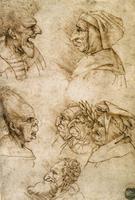
Seven caricatures
Francesco Melzi
Soldier
Vasily Surikov
Head of a Peasant with Cap
Vincent van Gogh
Un Poilu a Petain
Theophile Steinlen
The Hairy
Fernand Leger
Swearing to the left
Ferdinand Hodler
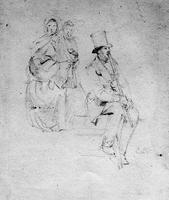
Study of Man with cylinder and cane and of two Women
Cristiano Banti
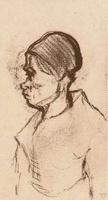
Peasant Woman, Head
Vincent van Gogh