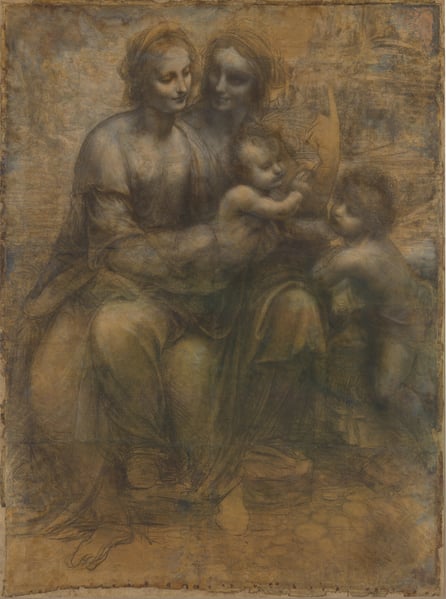
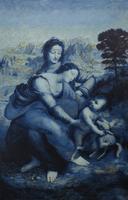
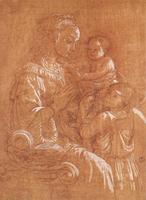
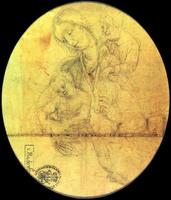
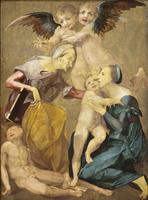
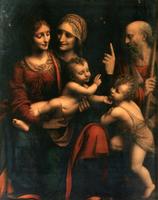
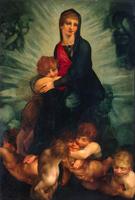
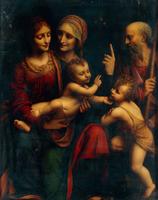
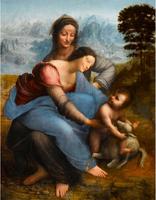
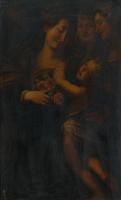
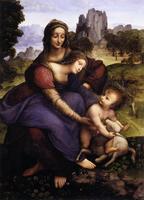
This religious painting from the High Renaissance is significant as a quintessential example of the period’s artistic ideals. Leonardo da Vinci’s mastery of composition, naturalism, and emotional resonance is embodied in the sacred subject matter, demonstrating the High Renaissance emphasis on harmony, balance, and the humanistic portrayal of divine figures. The work’s genre—a multi-figure religious scene—allowed Leonardo to explore complex interactions and spatial relationships, while its stylistic execution reflects the era’s shift toward lifelike anatomy and atmospheric perspective. As a piece by one of the period’s defining masters, it stands as a testament to the integration of religious narrative with advanced artistic technique that characterizes the High Renaissance.