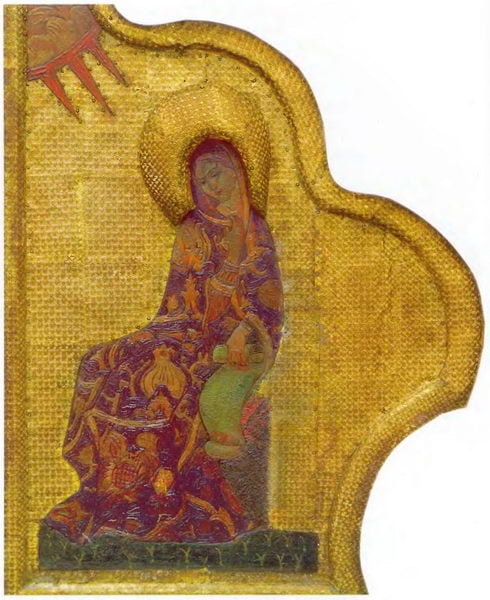
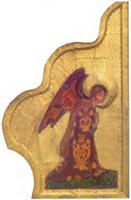
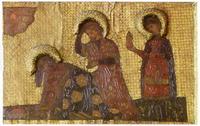
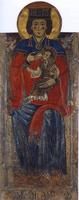
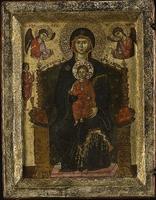
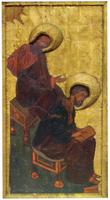
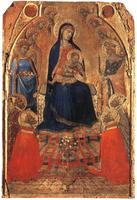
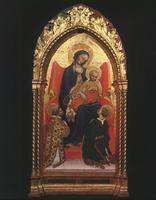
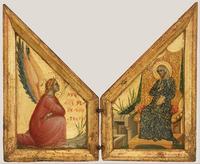
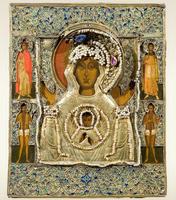
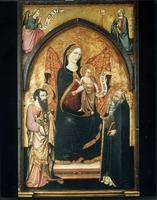
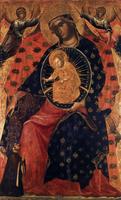
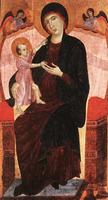
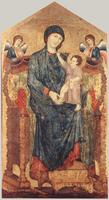
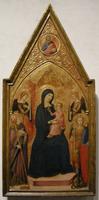
In Annunciation. Virgin Mary., Nicholas Roerich masterfully fuses the hieratic solemnity of Byzantine iconography with the lyrical, ornamental curves of Art Nouveau, creating a work that is both timeless and modern. The Byzantine influence is evident in the frontal, iconic presentation of the Virgin, the use of gold backgrounds, and the spiritual gravity typical of religious painting. Meanwhile, the Art Nouveau sensibility breathes life into the composition through flowing, sinuous lines, a decorative interplay of flat color planes, and a sense of rhythmic, organic movement that elevates the sacred scene into a symbol of universal harmony.
This artwork is significant precisely for this synthesis: it bridges the ancient, ritualistic tradition of Byzantine art—with its focus on divine mystery—and the turn-of-the-century Art Nouveau movement’s quest for beauty, nature, and spiritual renewal. Roerich does not merely depict a biblical moment; he transforms the Annunciation into a meditative icon where the Virgin Mary becomes a radiant conduit between heaven and earth, wrapped in a modern aesthetic that speaks to both the soul and the senses. This fusion marks a pivotal moment in religious painting, proving that sacred themes could be revitalized through the decorative and symbolic language of the modern era.