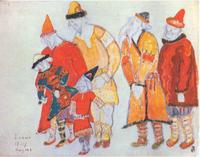
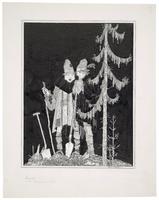
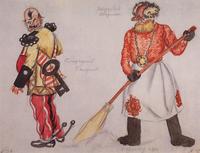
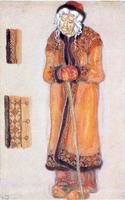
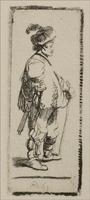
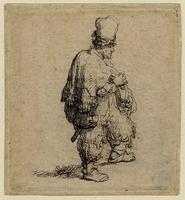
"Buttoner" by Nicholas Roerich exemplifies the seamless integration of fine art and functional design characteristic of the Art Nouveau movement. As a piece categorized under the genre of design, it reflects Roerich's broader engagement with decorative arts—a domain where Art Nouveau thrived by emphasizing organic forms, flowing lines, and a synthesis of beauty and utility. While the specific visual elements of "Buttoner" are not detailed in the provided facts, its significance lies in its embodiment of the period's ethos: the elevation of everyday objects to works of art. Roerich, primarily known for his mystical landscapes and theatrical sets, here demonstrates the movement's versatility, applying his symbolic and rhythmic sensibilities to a practical object. This work underscores Art Nouveau's ambition to erase the boundary between high art and craftsmanship, positioning "Buttoner" as both a functional item and an aesthetic statement—a hallmark of the style's revolutionary approach to design.