
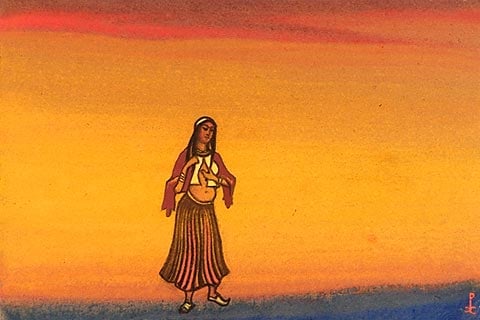
Analisi esperta di Captive di Nicholas Roerich
Stile: Art Nouveau (Modern) · Genere: design
Expert Analysis: "Captive" by Nicholas Roerich
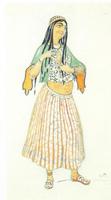
Nicholas Roerich’s “Captive,” executed in the Art Nouveau style and classified as a design work, is a significant example of how the movement’s decorative vocabulary was harnessed to convey deeper symbolic meaning. Although the piece exists within the realm of applied arts—likely conceived as a theatrical costume, stage set, or ornamental panel—it transcends mere ornamentation through Roerich’s unique synthesis of stylized natural forms and spiritual allegory.
Stylistic Significance:
As Art Nouveau flourished in Russia, Roerich infused its characteristic sinuous lines and flattened, decorative planes with an archaic, almost ritualistic sensibility. In “Captive,” the flowing, organic curves typical of the style—evident in the figure’s drapery and surrounding motifs—do not simply decorate; they evoke the entrapment of the soul within physical form. The emphasis on silhouette and pattern over naturalistic depth aligns with the Art Nouveau goal of integrating art into everyday life, but here it also serves a narrative purpose: the captive’s elongated contours suggest both elegance and constraint.
Thematic Innovation:
Roerich was deeply influenced by Russian folklore, Buddhist philosophy, and the symbolism of color. His “Captive” likely addresses themes of spiritual imprisonment and liberation—a preoccupation that sets his design apart from more purely decorative Art Nouveau works. The figure’s static, bound posture against a backdrop of rhythmic, almost hypnotic lines creates a tension between movement and stillness, echoing the liminal state between materiality and transcendence.
Legacy in Design:
“Captive” illustrates how Roerich elevated design from craft to conceptual art. Within the context of the Ballets Russes and Russian Symbolist theater, where he was a celebrated stage designer, such works bridged the gap between fine art and performance. The piece’s significance lies in its demonstration that the Art Nouveau style could carry profound psychological and mystical weight, prefiguring later avant-garde explorations of abstraction and the spiritual in art.
Visivamente simili
20 opere con composizione e palette affini

Captive with rose
Nicholas Roerich

Shirin and Khosrau
Nicholas Roerich
Girl In The Village
Sliman Mansour
Girls
Nicholas Roerich
Polovets with scimitar
Nicholas Roerich
Our mothers are always dressed in black
Ivan Milev
Captive
Nicholas Roerich
Middle-Eastern Figures
Marcel Janco
Maria Verkündigung
Heinrich Campendonk
Girl with horse
Carlos Saenz de Tejada
Ascension
Eric Gill
Die Königin von Saba
Arthur Segal
Iskander and hermit
Nicholas Roerich
Lel
Nicholas Roerich
Striking the Rock
Marc Chagall
Cikáni
Josef Capek
By the edge
Nicholas Roerich
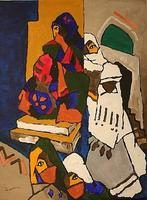
Women from Yemen
M.F. Husain
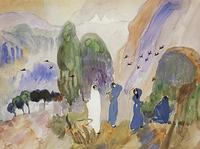
At the spring
Martiros Sarian
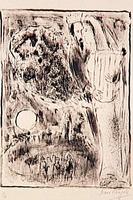
David and Bathsheba
Marc Chagall