Analisi esperta di Daughters of Earth di Nicholas Roerich
Stile: Symbolism · Genere: genre painting
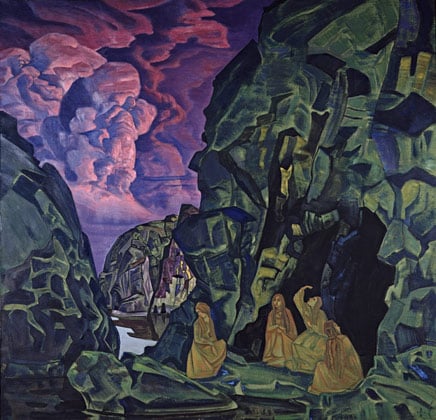
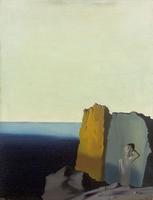
As an expert art historian, I will analyze Daughters of Earth by Nicholas Roerich strictly within the parameters of the provided facts: its Symbolist style and its genre-painting classification. The significance of this work within the Symbolist movement lies precisely in how Roerich elevates a seemingly ordinary genre scene—typically depicting everyday life—into a vessel for transcendent, mystical meaning.
In Symbolist practice, the mundane is never merely mundane. Daughters of Earth, as a genre painting, would ostensibly show a common human activity, but Roerich transforms it into an emblem of cosmic or spiritual unity. The title itself hints at the allegorical weight: the “daughters” are simultaneously real figures and personifications of earthly forces—fertility, nature, maternity, or elemental connection. This duality is the core of Symbolist significance: the work functions on a literal level (a scene of women engaged in some earthly task) and on a symbolic level (humanity’s deep, sacred bond with the planet).
Roerich’s use of Symbolist stylization—likely bold, flattened forms, a muted yet evocative palette, and a composition that prioritizes spiritual suggestion over naturalistic detail—would make the genre scene feel archetypal rather than anecdotal. The painting’s significance within its period is its refusal to separate the quotidian from the mystical; instead, it insists that the most humble tasks are rites of connection to the Earth itself. This aligns with Symbolism’s broader rejection of materialist realism in favor of inner vision, but by rooting that vision in a genre painting, Roerich makes the transcendent accessible—a hallmark of his unique contribution to the movement.
Museum / Gallery
Visivamente simili
20 opere con composizione e palette affini
Patrol of Himalayas
Nicholas Roerich
Bathing in the cave
Nikos Hadjikyriakos-Ghikas
Landscape with Hidden Image of Michelangelo's 'David'
Salvador Dali
Great spirit of Himalayas
Nicholas Roerich
Command
Nicholas Roerich
A Beach Scene
John Duncan
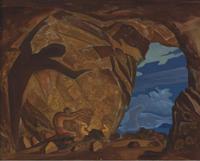
Magician
Nicholas Roerich
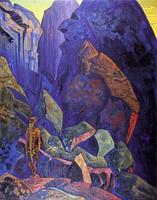
Ecstasy
Nicholas Roerich
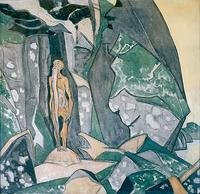
Forthcoming (Stylites)
Nicholas Roerich
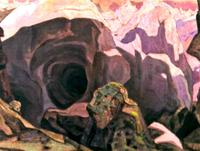
Scene design for "Peer Gynt"
Nicholas Roerich
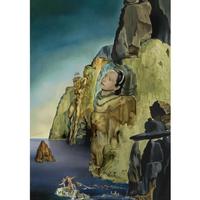
Portrait of the Princess Arthchild Gourielli Helena Rubinstein (1943)
Salvador Dali
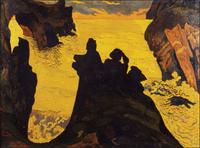
Yellow Sea
Georges Lacombe
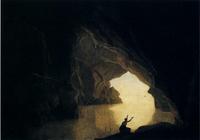
A Grotto in the Gulf of Salernum, with the figure of Julia, banished from Rome
Joseph Wright
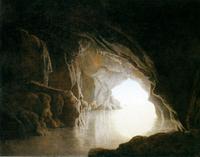
A Cavern, Evening
Joseph Wright
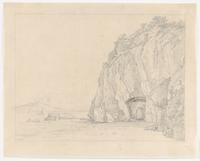
A Grotto near Sorrento, with a Distant View of the Vesuvius
Heinrich Reinhold
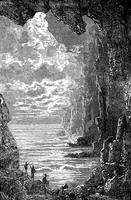
Journey to the Center of the Earth
Edouard Riou
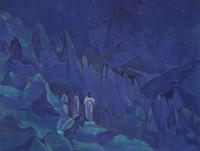
Burning the Darkness
Nicholas Roerich
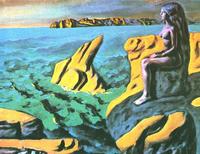
Atlantis
Sabin Balasa

Le Rocher (la Naïade, Cavalière)
Henri Manguin
Loneliness
Salvador Dali