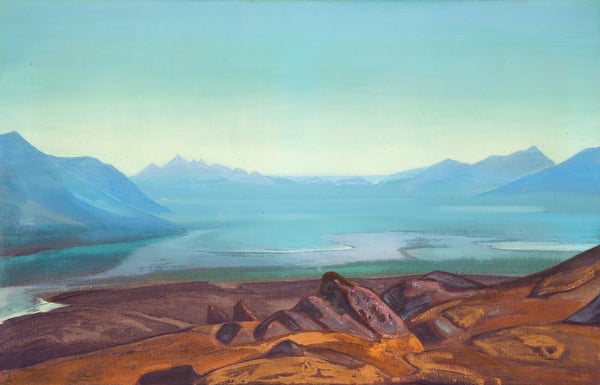
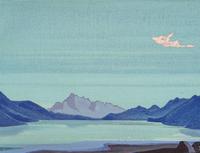
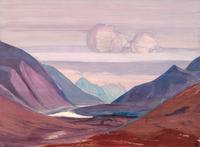
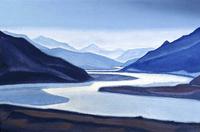
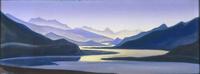
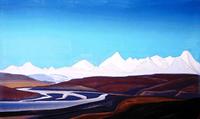
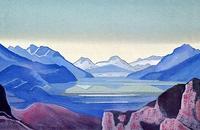
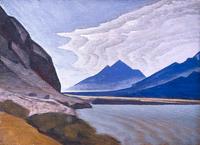
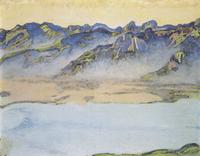
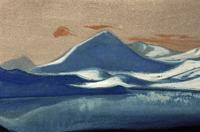
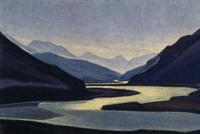
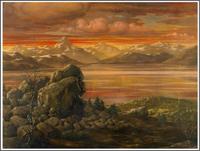
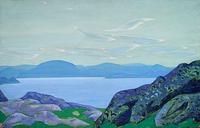
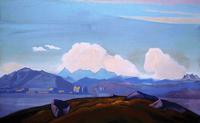
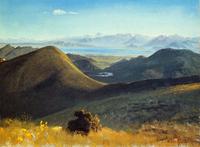
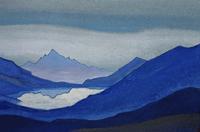
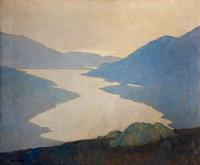
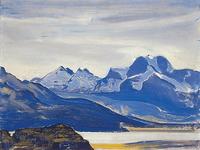
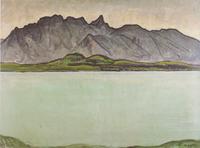
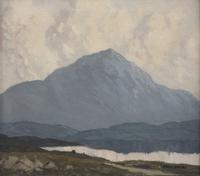
In Nicholas Roerich’s Dogra Yumtso, the landscape transcends mere topography to become a visionary gateway. Executed in the Symbolist style, the painting transforms a high-altitude lake into a meditative emblem of the sublime. Roerich’s signature use of luminous, unmodulated blues and stark white peaks evokes a world purified of the mundane—a frozen moment where earth, water, and sky dissolve into a single spiritual essence.
The work is significant within Symbolism for its fusion of Eastern sacred geography with the movement’s pursuit of inner, metaphysical truths. Rather than documenting a literal vista, Roerich imbues the scene with a hushed, ritualistic aura; the still waters of Dogra Yumtso become a mirror for cosmic consciousness. This approach marks Roerich’s unique contribution to the period: a landscape that functions as both icon and incantation, inviting the viewer to contemplate the unity of nature and the divine.