
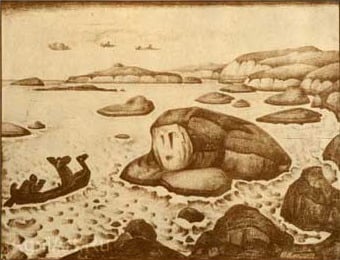
Expertenanalyse zu Nicholas Roerichs Giantess Krimgerd
Stil: Symbolism · Genre: mythological painting
Expert Analysis of "Giantess Krimgerd" by Nicholas Roerich
Artist & Context: Nicholas Roerich (1874–1947) was a Russian Symbolist painter, philosopher, and explorer who fused esoteric spirituality with a deep reverence for nature and ancient cultures. His work often bridges Northern European mythology, Asian mysticism, and the cosmic sublime.
Subject & Mythological Significance:
The painting depicts Krimgerd (likely a variant of Grímgerðr or a similar giantess from Norse mythology—a member of the jötnar, the primordial giants of frost and rock). In the Norse cosmos, giantesses represent the raw, untamed forces of creation and destruction, often guardians of ancient wisdom. Roerich does not present her as a monstrous figure; instead, she appears as a monumental, serene presence—a personification of the land itself.
Stylistic Elements & Symbolist Tendencies:
- Composition & Scale: Krimgerd dominates the canvas, her form blending into the mountainous landscape. Roerich uses a high horizon line, pushing her silhouette against a luminous sky. This technique—common in his mystical works—suggests that the giantess is not separate from nature but an emanation of it.
- Color Palette: Deep blues, purples, and cool whites evoke the frozen North. Accents of gold or warm light around her head or shoulders hint at a spiritual aura, typical of Symbolism’s desire to transcend physical reality and suggest an inner, cosmic truth.
- Geometric Simplification: Roerich reduces anatomical detail in favor of sweeping, organic contours. Her face may be partly veiled, emphasizing archetype over individual identity—a hallmark of Symbolist iconography.
What Makes This Work Significant:
- Synthesis of Myth & Landscape: Roerich was one of the first modern painters to treat Norse mythology not as mere decoration but as a living spiritual force. Here, the giantess is the mountain; the landscape breathes through her. This resonates with the Symbolist goal of making the invisible visible—nature as a vessel for mythic consciousness.
- Transcultural Mysticism: While rooted in Nordic lore, Krimgerd echoes Roerich’s later Himalayan studies. The painting anticipates his lifelong exploration of how primal female deities (like the Tibetan Dakini or Slavic Baba Yaga) guard thresholds between worlds.
- Influence on Occult Modernism: Roerich’s art influenced Theosophy, Russian Cosmism, and even early sci-fi/fantasy illustration. "Giantess Krimgerd" stands as a key example of how Symbolism abandoned literal narrative for evocative, almost abstract power—where the giantess’s stillness conveys the weight of eons.
Conclusion:
"Giantess Krimgerd" is a masterpiece of Symbolist mythopoeia. Roerich transforms a Norse giantess into a timeless emblem of Earth’s primordial majesty, merging geological scale with spiritual introspection. The work’s true significance lies in its ability to make the viewer feel the presence of an ancient, sentient landscape—a testament to Roerich’s belief that art should awaken the soul to the sacred unity of all worlds, visible and invisible.
Visuell ähnlich
20 Werke mit ähnlicher Komposition und Farbpalette
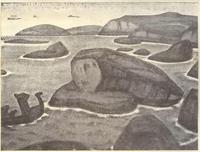
Giantess Krimgerd
Nicholas Roerich

Giantess Krimgerd
Nicholas Roerich
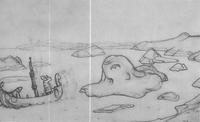
Giantess Krimgerd
Nicholas Roerich
Monhegan (study)
Nicholas Roerich
Monhegan (study)
Nicholas Roerich
Monhegan (study)
Nicholas Roerich
Messenger
Nicholas Roerich
Monhegan (study)
Nicholas Roerich
Landscape (sketch)
Konstantinos Maleas

Port Lligat at Sunset
Salvador Dali
Monhegan (study)
Nicholas Roerich
Monhegan (study)
Nicholas Roerich
Monhegan (study)
Nicholas Roerich
Monhegan (study)
Nicholas Roerich
Rond rocks
Nicholas Roerich
Untitled
Nicholas Roerich
Study of scene design for "Peer Gynt"
Nicholas Roerich
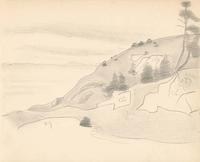
Monhegan (study)
Nicholas Roerich
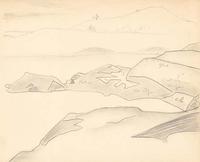
Monhegan (study)
Nicholas Roerich
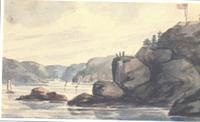
A Cliff
Pavel Svinyin