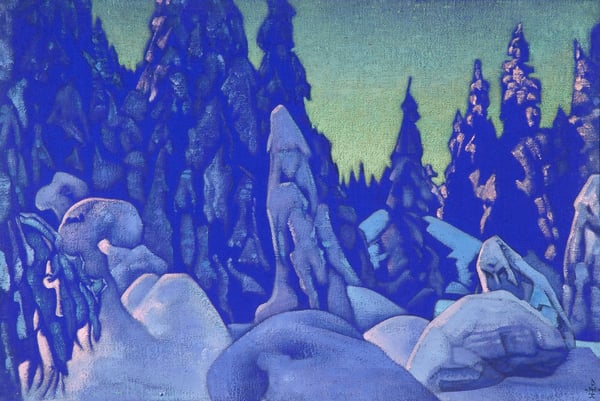
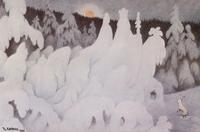
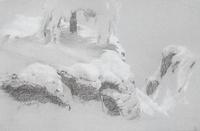
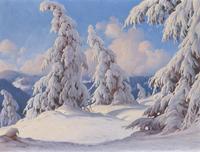
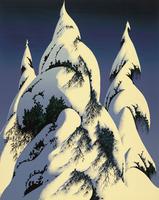
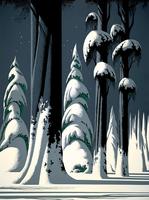
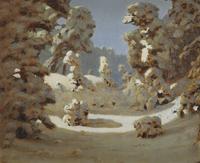
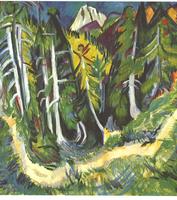
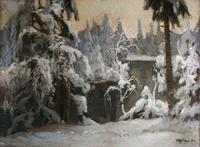
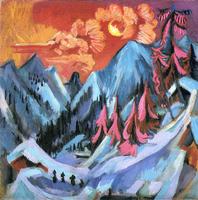
As a work of Nicholas Roerich within the Symbolist movement, Guardians of the Snow transcends the conventional landscape genre by transforming a natural scene into a vessel for spiritual and metaphysical meaning. Roerich’s treatment of mountain peaks as sentinel-like “guardians” aligns perfectly with Symbolism’s rejection of mere visual representation in favor of evoking inner truths and cosmic forces. The snow-covered summits become archetypal symbols of purity, endurance, and the eternal, echoing the artist’s lifelong fascination with the Himalayas as a sacred, otherworldly realm.
What makes this artwork significant is Roerich’s ability to imbue a stark, panoramic vista with an aura of silent, solemn power—a hallmark of his mature style. The composition likely emphasizes sweeping, uncluttered horizons and an intense, almost monochromatic palette of blues and whites, using light not for naturalistic effect but as a metaphor for spiritual illumination. Within Symbolism, such landscapes are rare in their rejection of human figures, instead making nature itself the protagonist and the guardian of hidden wisdom. Guardians of the Snow thus stands as a prime example of Roerich’s unique synthesis of landscape painting and mystic symbolism, where the sublime vastness of the natural world becomes a direct conduit to the divine.