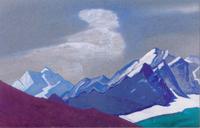
The significance of Nicholas Roerich’s “Himalayas” lies in its masterful fusion of landscape painting with the core tenets of Symbolism, transforming a natural vista into a profound spiritual and metaphysical statement. As a Symbolist work, the painting does not merely depict a geographic locale but uses the Himalayan peaks as a vessel for transcendent ideas—purity, eternity, and the sublime quest for inner enlightenment. Roerich’s treatment of light and color, often described as “luminous,” suffuses the snow-capped mountains with an ethereal, almost otherworldly glow, evoking the spiritual atmosphere central to his philosophy. The composition typically emphasizes the monumental scale and serene isolation of the range, stripping away anecdotal detail to focus on the mountains as archetypes of cosmic stillness. This approach aligns Roerich with the Symbolist movement’s rejection of mere realism in favor of art that communicates hidden truths and emotional resonance. In “Himalayas,” the landscape becomes a bridge between the material world and the divine, making the work significant as a prime example of how Symbolism could infuse traditional genres like landscape with a profound, meditative power.