
Analisi esperta di In a monastery di Nicholas Roerich
Stile: Art Nouveau (Modern) · Genere: design
Expert Analysis of “In a monastery” by Nicholas Roerich
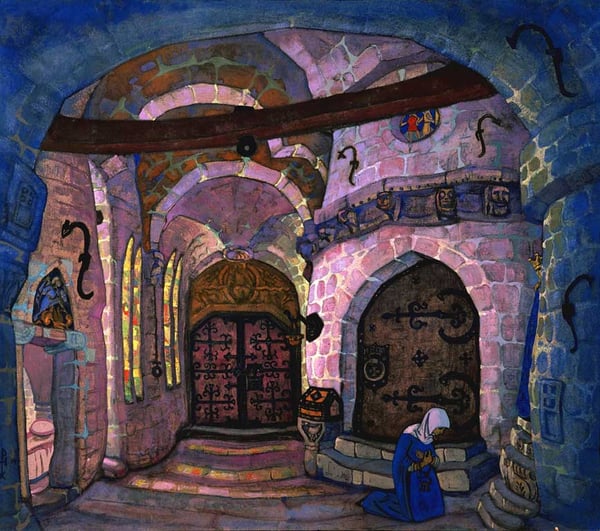
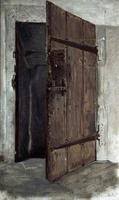
Nicholas Roerich’s “In a monastery” is a significant work within the Art Nouveau (Modern) movement, specifically through its designation as a design genre piece. This classification underscores the era’s blurring of boundaries between fine art and applied arts—a core tenet of Art Nouveau—and highlights Roerich’s dual role as both a painter and a visionary designer.
Key Significance within Art Nouveau (Modern):
-
Synthesis of Decoration and Spirituality
Art Nouveau prized organic, flowing lines and ornamental richness, yet Roerich’s design infuses these formal qualities with a contemplative, almost mystical atmosphere. The title “In a monastery” suggests a setting of quietude and ritual, which Roerich translates into a composition likely defined by rhythmic, vertical elements (reminiscent of church architecture or monastic cloisters) and a restrained, harmonious color palette. This marriage of decorative elegance with spiritual introspection elevates the work beyond mere ornament—it becomes a visual meditation. -
Genre as a Statement of Modernity
By labeling the piece as “design,” Roerich aligns himself with the Modernist rejection of hierarchy between high art and functional craft. In Art Nouveau, design was not a lesser category but a field of total artistic integration—seen in everything from book illustrations to stained glass, furniture, and theater sets. Roerich’s choice to place a monastery scene within this context suggests that sacred or historical themes could be reimagined through a contemporary, applied lens, making art accessible and immersive. -
Roerich’s Unique Voice in the Movement
While many Art Nouveau artists drew from nature (plants, insects, female forms), Roerich’s work often looked to medieval Russian and Eastern iconography, blending Byzantine-like gold, deep blues, and symbolic architecture with Art Nouveau’s sinuous outlines. “In a monastery” likely reflects this synthesis: a stylized, flattened space typical of the style, yet charged with the artist’s trademark spiritual symbolism—monastic cells, candlelight, or sacred geometry. This positions the work as a bridge between folk tradition and modernist abstraction.
Conclusion
“In a monastery” is significant because it encapsulates Art Nouveau’s ambition to turn everyday environments into vessels of beauty and meaning. Roerich uses the design genre not to diminish the subject’s solemnity, but to amplify its relevance to a modern audience, proving that even a quiet monastic interior could become a dynamic, decorative statement of the age.
Visivamente simili
20 opere con composizione e palette affini
In the nunnery
Nicholas Roerich
Żegocina
Jan Matejko
Churlish
Nicholas Roerich
Bergaporten
John Bauer
The Entrance Hall of the Regensburg Synagogue
Albrecht Altdorfer
Study to"Sister Beatrice"
Nicholas Roerich
Prison
Nicholas Roerich
The Entrance to the Blue Chamber
Richard Doyle
Glory to the hero
Nicholas Roerich
Illustration of Victor Hugo's Novel the Man Who Laughs
Georges Rochegrosse
Room of Sadko
Nicholas Roerich
Corridors of the castle. Dungeons
Nicholas Roerich
Tower of terror
Nicholas Roerich
Inner yard
Nicholas Roerich
The Sleeping Beauty
Richard Doyle
Sketch for 'Seeking Sanctuary'
Ralph Hedley
Maleine's room
Nicholas Roerich
Shadows
Nicholas Roerich
The ambush
Alexandre-Louis Leloir
Doorway
Marcus Stone