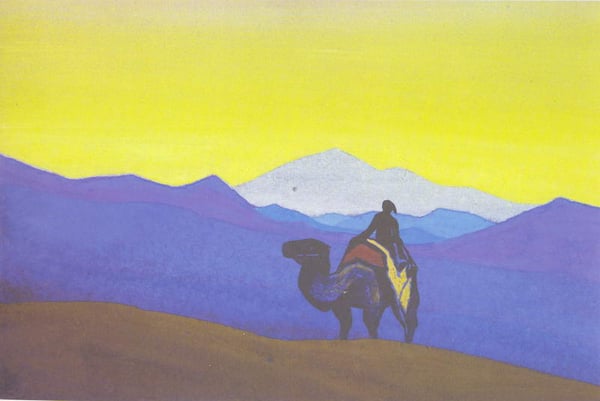
In Nicholas Roerich's "Lonely Stranger," the artist masterfully fuses the conventions of genre painting—typically depicting scenes of everyday life—with the transcendent, introspective language of Symbolism. The work gains its significance through this very tension: a solitary figure, rendered in a mundane, anonymous moment, is set against a vast, luminous landscape that becomes a vessel for spiritual longing and existential solitude. Roerich’s characteristic use of intense, otherworldly color and simplified forms elevates the scene beyond mere anecdote, turning the “stranger” into a universal archetype of the soul journeying through an unknowable cosmos. Within the Symbolist movement, this piece stands out for its quiet, monumental restraint—eschewing dramatic symbolism in favor of a meditative stillness, where the figure’s isolation echoes the period’s fascination with inner mystery and the search for transcendence in the ordinary.