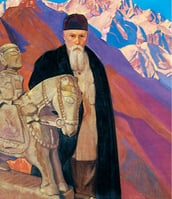
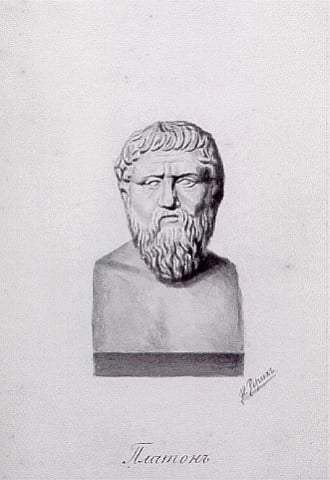
Expert analysis of Nicholas Roerich’s Platon
Style: Realism · Genre: still life
Expert Art Historical Analysis: "Platon" by Nicholas Roerich
Nicholas Roerich (1874–1947) is best known for his highly symbolic, mystical landscapes and stage designs—works steeped in theosophy and Eastern spirituality. However, the painting "Platon" (the only supplied facts are its Realist style and still life genre) stands as a fascinating departure from his typical oeuvre.
Significance within Realism and the Still Life Genre:
-
Rare Realist Still Life by a Symbolist Master: While Roerich’s reputation rests on his luminous, otherworldly Himalayan scenes and heroic historical compositions, "Platon" grounds him in the tradition of meticulous, observational painting. Its significance lies in demonstrating Roerich’s technical versatility: even within a Realist framework, he applies the same clarity of line and attention to material texture that characterize his later works, but here focused on an intimate, non-narrative arrangement.
-
Still Life as a Vehicle for Intellectual Reflection: The title "Platon" (Plato) suggests that the still life transcends mere decorative arrangement. In Realist still life, objects are often chosen for their symbolic weight—books, manuscripts, or philosophical attributes. Roerich likely elevates mundane objects into a meditation on classical thought. The Realist style ensures that each object is rendered with precision, inviting the viewer to contemplate their material presence and intellectual associations simultaneously.
-
Contrast to Roerich’s Typical Subject Matter: For an artist who usually painted vast, cosmic vistas or epic historical scenes, a still life represents a deliberate turn toward the intimate and the philosophical. "Platon" may thus be interpreted as a memento mori or a vanitas within a Realist idiom, reminding us of the tangible anchors of abstract ideas.
-
Technical Mastery in the Realist Tradition: The painting’s significance also lies in its demonstration of Roerich’s ability to capture texture, light, and form with the fidelity demanded by Realism. This places him in dialogue with 19th-century Realist still-life painters who insisted on truth to visual experience, even as Roerich’s broader career pushed toward mysticism.
Conclusion: While Nicholas Roerich is celebrated for his transcendent, symbolic art, "Platon" stands out as a rare, disciplined exercise in Realist still life—a work that grounds abstract thought in the concrete world of objects. Its significance lies in the contrast it presents within his body of work, proving that even a visionary can master the quiet, reflective tradition of still-life realism.
Visually similar
20 works with related composition and palette
Euripides
Nicholas Roerich
Homer
Nicholas Roerich
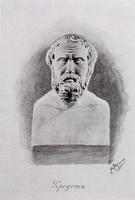
Herodotus
Nicholas Roerich
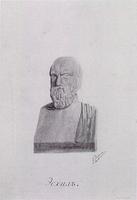
Aeschylus
Nicholas Roerich
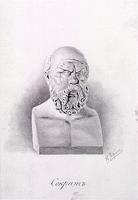
Socrates
Nicholas Roerich
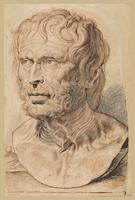
Bust of Pseudo Seneca
Peter Paul Rubens
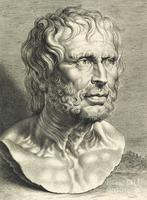
Bust of Seneca
Peter Paul Rubens
Hippocrates Hiraclidae
John Faber II
Platão
Lilian Greisse
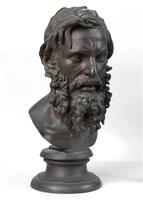
The Philosopher
Vincenzo Gemito
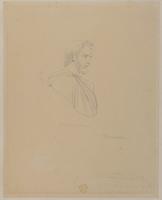
Classical Bust of a Bearded Male Seen in Profile
Vincenzo Camuccini
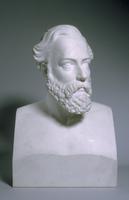
Bust of Dr. Dio Lewis
Edmonia Lewis
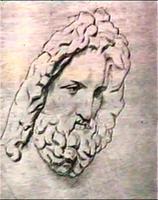
Head of Zeus
Nicholas Roerich
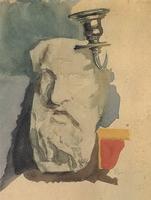
Still Life. Plaster mask, horn of chandelier.
Mikhail Vrubel
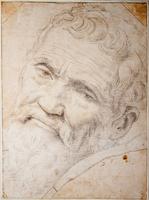
Portrait of Michelangelo Buonarroti
Daniele da Volterra
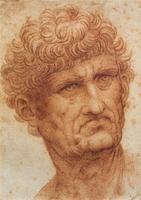
Head of a Man
Leonardo da Vinci
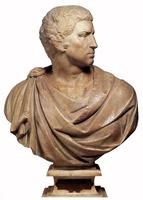
Bust of Brutus
Michelangelo
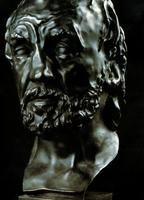
Man with a Broken Nose
Auguste Rodin
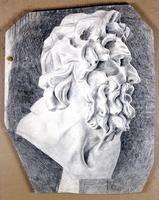
The head of Laocoon in the profile
Ilya Mashkov
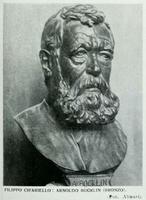
Arnoldo Bocklin
Filippo Cifariello