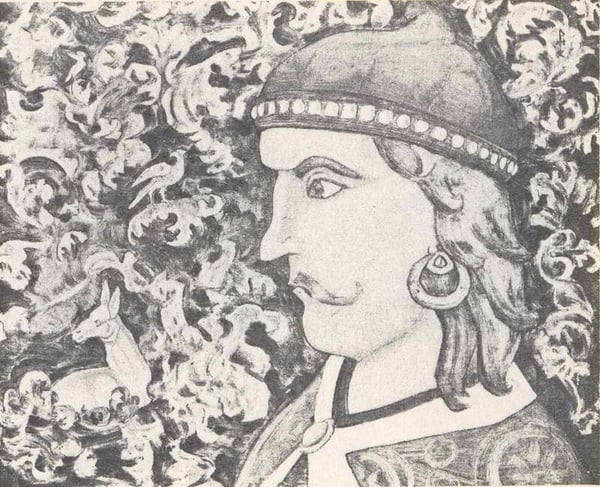
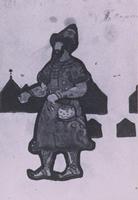
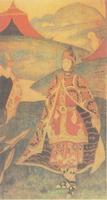
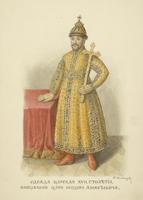
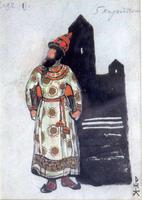
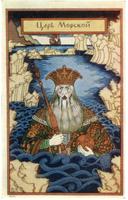
Based solely on the provided facts, the significance of "Prince (Knyaz)" by Nicholas Roerich lies in its fusion of the Art Nouveau (Modern) style with the traditional portrait genre. Within the Art Nouveau movement, portraiture offered a unique opportunity to blend psychological depth with the period's hallmark decorative elegance. The title "Prince (Knyaz)"—a Russian term for a medieval noble—suggests a subject rooted in historical or mythological narrative, which Art Nouveau artists often used to explore national identity and spiritual symbolism. Roerich’s work, within this style, is significant for how it likely transforms a static genre (portrait) into a dynamic, symbolic statement—using sinuous lines, flattened space, and ornamental pattern (characteristic of Art Nouveau) to elevate the sitter from a mere individual to an archetype of Russian heritage. This makes the artwork a key example of how Modernist portraiture moved beyond realistic depiction toward expressive, culturally resonant iconography.