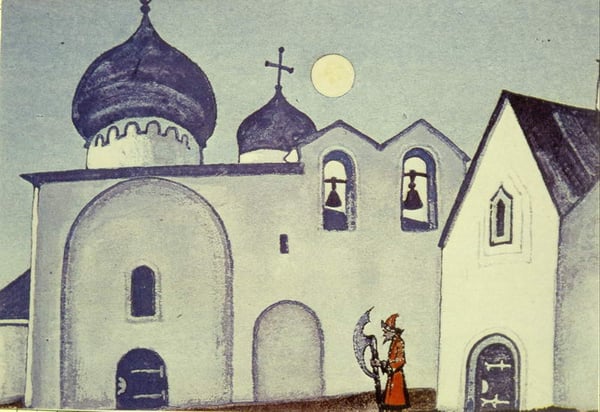
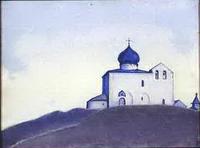
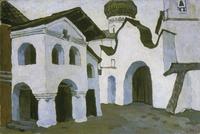
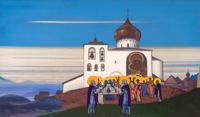
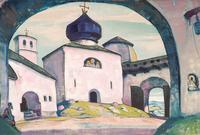
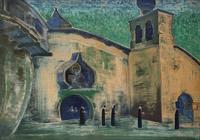
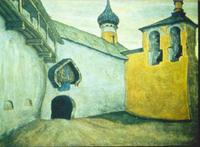
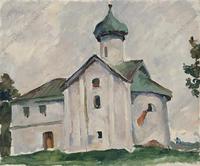
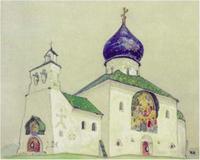
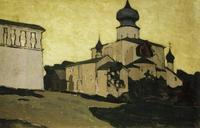
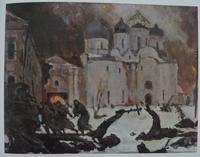
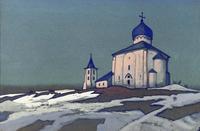
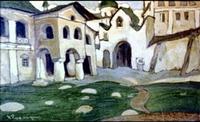
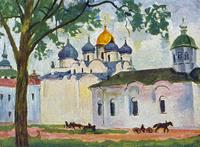
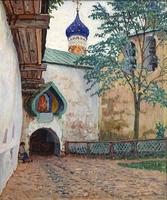
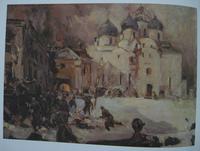
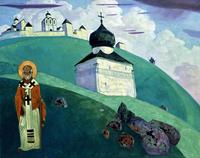
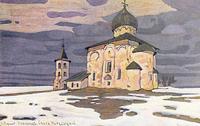
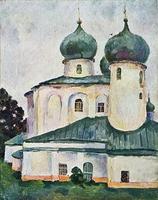
The cityscape Pskov by Nicholas Roerich is a significant work within the Symbolist movement, exemplifying how the style transcends mere topographical representation to evoke spiritual and historical resonance. As a Symbolist painting, it prioritizes mood, memory, and metaphysical meaning over naturalistic detail. Roerich’s choice of Pskov—an ancient Russian city with deep cultural and religious roots—allows him to transform a specific locale into a timeless emblem of Slavic heritage. The composition likely emphasizes the city’s medieval kremlin, churches, and fortress walls, not as documentary records, but as symbols of endurance, faith, and the mystical connection between the land and its people. The muted, often earthy palette and simplified, almost iconic forms typical of Roerich’s style here serve to abstract the scene, stripping away modernity to reveal an eternal, spiritual Russia. The significance lies in how Roerich uses the cityscape to channel Symbolism’s core ambition: to make the visible world a vessel for invisible ideals—in this case, the soul of a nation and the quiet power of antiquity.