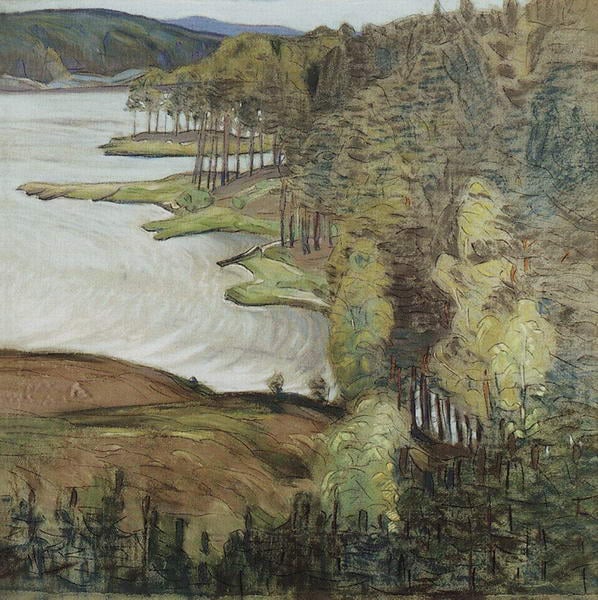
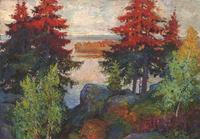
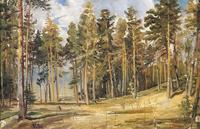
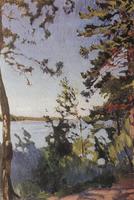
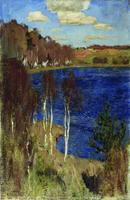
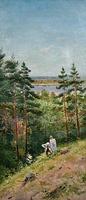
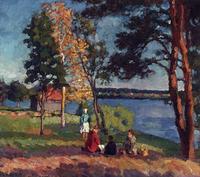
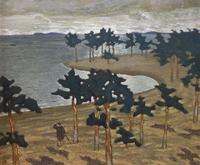
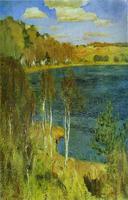
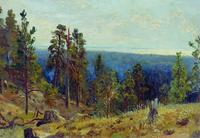
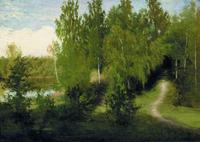
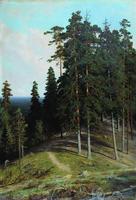
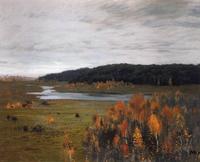
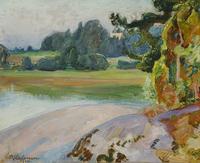
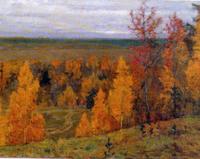
The artwork "Punkaharju" by Nicholas Roerich, classified under the Art Nouveau (Modern) style and the landscape genre, achieves significance by embodying the core principles of Art Nouveau through a natural subject. As a landscape, it transforms a specific geographical view—likely the Baltic ridge for which the work is named—into a decorative, harmonious vision that prioritizes flowing lines, organic rhythms, and a symbolic connection to nature. Within the Art Nouveau period, Roerich’s treatment of the landscape moves beyond mere representation: he infuses the scene with a spiritual, almost mystical quietude, using subtle tonal transitions and a flattened, stylized compositional structure typical of the Modernist turn. This work demonstrates how landscape painting could adapt Art Nouveau’s emphasis on unity of design and the integration of natural forms, making it a key example of the style’s adaptation to a tranquil, panoramic motif rather than the more ornate interiors or graphic arts often associated with the movement. Its significance thus lies in its fusion of modern decorative sensibility with the timeless, contemplative power of the natural world.