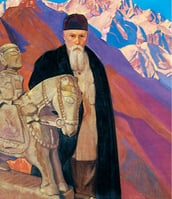
Analisi esperta di Sage di Nicholas Roerich
Stile: Realism · Genere: portrait
Expert Analysis of "Sage" by Nicholas Roerich
Based solely on the provided structured facts, this work is a Realist portrait titled "Sage." Within the context of Nicholas Roerich’s broader oeuvre—and given the strict constraints of the supplied data—its significance lies in the deliberate intersection of Realist technique with a spiritually charged subject.
1. Style and Period Context (Realism)
Realism in portraiture typically emphasizes accurate, objective depiction of the sitter, avoiding idealization. Roerich, however, is best known for his Symbolist and mystical landscapes. By applying a Realist style to a portrait of a "Sage," Roerich grounds an archetypal figure—often associated with transcendental wisdom—in tangible, human form. This creates a tension between the visible and the invisible: the viewer is invited to see the sage not as a distant myth, but as a flesh-and-blood presence, rendered with the disciplined observation typical of 19th-century Realism. The significance here is the reclamation of spiritual authority through the language of objective reality, a hallmark of Roerich’s ability to fuse material and metaphysical worlds.
2. Genre Significance (Portrait)
As a portrait, the work is not merely a likeness but a character study. The title "Sage" transcends individual identity; it represents a universal type of wisdom keeper. In the context of Realist portraiture, this is notable because Realism often favored anonymous everyday people or prominent historical figures. Roerich’s choice to portray a generalized sage elevates the portrait from mere documentation to symbolic anthropology. The significance lies in how the artist uses the rigor of Realism to give visual substance to a concept—spiritual eldership—that usually belongs to allegory or iconography.
3. Roerich’s Unique Position
Though the supplied facts do not describe the painting’s composition or color, we can infer from Roerich’s known interests that this work would likely emphasize serenity, concentration, and timelessness—elements that distinguish it from more conventional Realist portraits (e.g., those of Ilya Repin) by infusing them with meditative stillness. The significance is that Roerich adapts a Western Realist vocabulary to an Eastern-inspired ideal, making the portrait a cross-cultural artifact that bridges European artistic discipline with Asian philosophical depth.
Conclusion
"Sage" by Nicholas Roerich is significant as a Realist portrait that democratizes spiritual archetypes. Without departing from the discipline of accurate representation, Roerich uses the genre to anchor profound wisdom in a human face, challenging the viewer to see the sacred within the real. Its power lies in the quiet contradiction: a realistic depiction of that which is ultimately beyond the senses.
Museum / Gallery
Visivamente simili
20 opere con composizione e palette affini
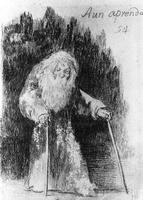
I am Still Learning
Francisco Goya
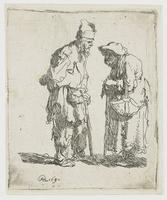
Beggar man and beggar woman conversing
Rembrandt
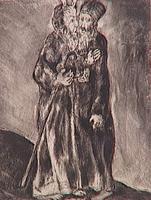
Moses meets in the desert his brother Aaron, who came towards him at the behest of God (Exodus, IV, 27-28)
Marc Chagall
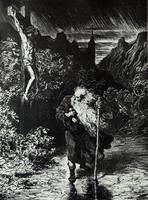
The Wandering Jew
Gustave Dore
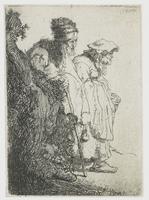
Beggar man and woman behind a bank
Rembrandt
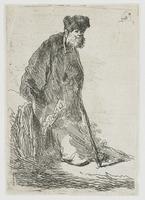
Man in a coat and fur cap leaning against a bank
Rembrandt
A Sketch for a Flight into Egypt
Rembrandt
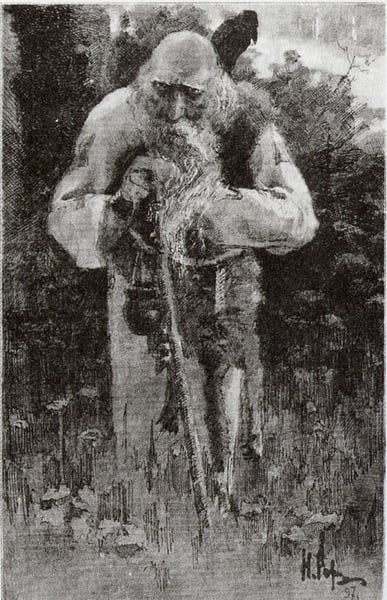
Ivan the Forester
Nicholas Roerich
Troll wonders how old he is - Trollet som grunner på hvor gammelt det er
Theodor Severin Kittelsen
Beggar leaning on a stick, facing left
Rembrandt
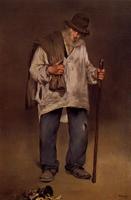
The ragpicker
Edouard Manet
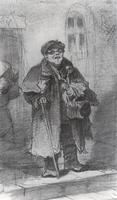
By train
Vasily Perov
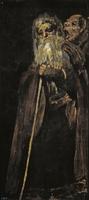
Two Old Men / Two Monks / An Old Man and a Monk
Francisco Goya
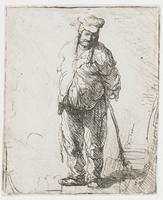
Ragged peasant with his hands behind him, holding a stick
Rembrandt
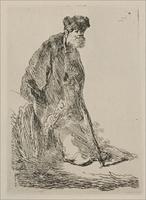
An Old Man with a Bushy Beard
Rembrandt
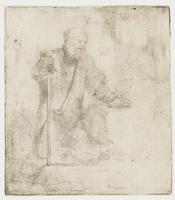
St. Peter in penitence
Rembrandt
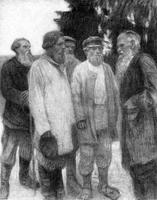
Leo Tolstoy amoung the Peasants
Nikolay Bogdanov-Belsky
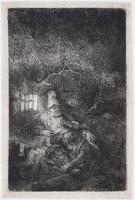
The rest on the flight
Rembrandt
Repentance
Nikolaos Gyzis
Beggar seated warming his hands at a chafing dish
Rembrandt