
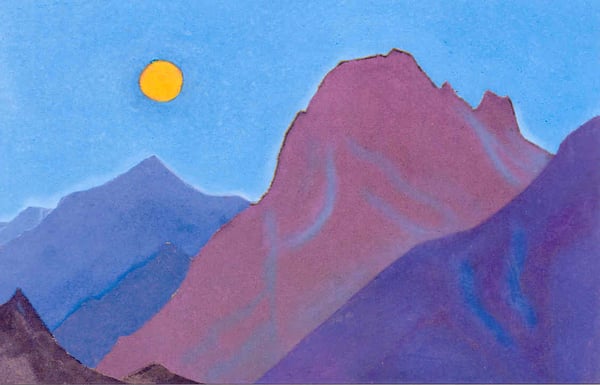
Study of mountains
Analisi esperta di Study of mountains di Nicholas Roerich
Stile: Symbolism · Genere: landscape
Expert Analysis of "Study of Mountains" by Nicholas Roerich
Nicholas Roerich’s Study of Mountains is a quintessential example of Symbolist landscape painting, where the natural world is transformed into a conduit for spiritual and metaphysical meaning. Within the Symbolist movement, which flourished in the late 19th and early 20th centuries, landscape was rarely a mere topographical record; instead, it served as a mirror for inner states, cosmic forces, or esoteric truths. This artwork is significant precisely because it exemplifies Roerich’s signature approach—using rugged mountain forms not as geographic studies, but as symbols of transcendence, aspiration, and the eternal.
Stylistic and Thematic Significance
- Symbolist Landscape as Inner Vision: In this work, the mountains are stripped of detailed naturalism and rendered with deliberate simplicity and bold color harmonies. Their towering, almost architectonic shapes evoke a sense of the sublime, a key Symbolist preoccupation. The “study” format suggests a concentrated exploration of form and mood, rather than a finished narrative scene, allowing the viewer to focus on the symbolic resonance of the peaks—often interpreted in Roerich’s oeuvre as emblems of spiritual ascent and the threshold between the earthly and the divine.
- Roerich’s Unique Contribution: Roerich was deeply influenced by Eastern philosophy, Theosophy, and the mystical landscapes of the Himalayas. In Study of Mountains, this synthesis—of Symbolist introspection and Eastern reverence for nature’s sacred power—is distilled into its purest form. The mountains are not merely majestic; they are hieratic, almost sentient presences, inviting contemplation of higher states of consciousness. This elevates the piece from a simple landscape study to a symbolic icon, representative of Roerich’s lifelong attempt to bridge art and spirituality.
- Genre as Symbol: By working within the “landscape” genre, Roerich revitalizes it for Symbolism. Unlike the narrative focus of much Symbolist art (e.g., mythical or allegorical scenes), he demonstrates that nature itself can carry symbolic weight when stripped to its elemental forms. Study of Mountains thus stands as a pivotal work that shows how Symbolist ideas could be expressed through pure landscape, anticipating later developments in modernist abstraction while retaining a deeply spiritual core.
Conclusion
Study of Mountains is significant as a focused, concentrated distillation of Nicholas Roerich’s Symbolist vision. It transforms a natural motif into a universal symbol of spiritual striving and cosmic order, embodying the movement’s core belief that art should reveal hidden truths beyond the material world.
Visivamente simili
20 opere con composizione e palette affini

Himalayas
Nicholas Roerich

Study of mountains
Nicholas Roerich

Himalayas (study)
Nicholas Roerich

Himalayas. Moon mountains.
Nicholas Roerich

Himalayas
Nicholas Roerich

Kampa Dzong. Pink Peak.
Nicholas Roerich

Himalayas (study)
Nicholas Roerich

Himalayas
Nicholas Roerich

Himalayas (study)
Nicholas Roerich

Himalayas
Nicholas Roerich

Himalayas. Sunrise.
Nicholas Roerich

Himalayas. Chain of mountains.
Nicholas Roerich

Ladakh
Nicholas Roerich

Himalayas (study)
Nicholas Roerich

Sunrise (Unfinished)
Nicholas Roerich

Himalayas. Rain.
Nicholas Roerich

Himalayas
Nicholas Roerich

Young Moon
Nicholas Roerich

Warrior of Light
Nicholas Roerich

Himalayas
Nicholas Roerich