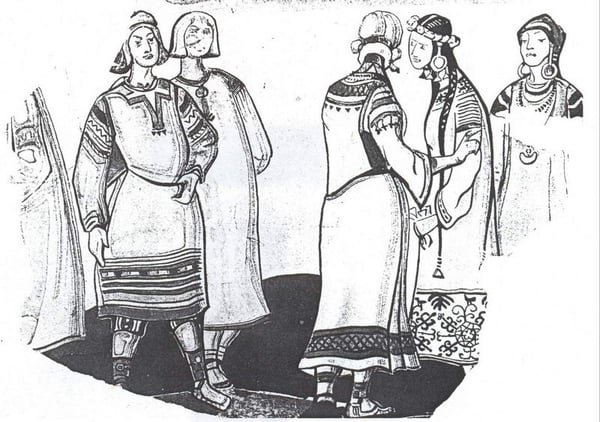
The scene with five figures in costumes
Nicholas Roerich sanatçısının The scene with five figures in costumes eseri hakkında uzman analizi
Tarz: Art Nouveau (Modern) · Tür: design
Expert Analysis: "The scene with five figures in costumes" by Nicholas Roerich
This work exemplifies Nicholas Roerich’s unique contribution to Art Nouveau through the lens of theatrical and costume design. Within the Art Nouveau (Modern) movement, which flourished from the 1890s to the early 1910s, designers sought to unify art with everyday life and performance—often embracing sinuous, organic lines, flattened decorative patterns, and a rejection of historical revivalism. Roerich, however, stands apart by infusing these modern aesthetics with a deep spiritual and archaeological sensibility.
Significance within Style and Period:
-
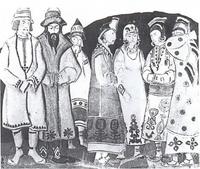
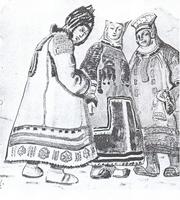
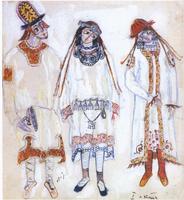
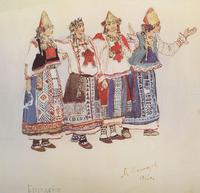
Synthesis of Orientalism and Russian Folk Traditions – Roerich’s costume designs frequently draw on ancient Slavic, Scandinavian, and Central Asian motifs. The five figures here are not merely ornamental; they evoke a ritualistic or epic narrative, blending the decorative elegance of Art Nouveau with the evocative power of folkloric symbolism. The costumes likely emphasize flowing fabrics, stylized geometric borders, and jewel-toned hues—hallmarks of Roerich’s stage work for Sergei Diaghilev’s Ballets Russes, where modernism met ethnographic authenticity.
-
Design as Narrative – Because the genre is explicitly design, this piece was likely created as a preparatory sketch for a theatrical production (e.g., an opera or ballet). Roerich elevates costume design from mere illustration to an integral component of the Gesamtkunstwerk (total work of art), a key Art Nouveau ideal. The five figures, positioned in a somewhat static, frieze-like arrangement, suggest a moment of dramatic tension—each costume’s silhouette, color palette, and ornamentation conveys character, social rank, or symbolic role.
-
Decorative Abstraction within Modernism – While Art Nouveau often favored natural forms (vines, flowers, tendrils), Roerich replaces these with stylized, almost architectural geometry and bold, flattened color fields. This foreshadows the later shift toward Art Deco and symbolic abstraction. The “sceneness” of the composition—with figures posed against an implied backdrop—reflects the movement’s fascination with the theater as a space where modernity and myth converge.
In summary, this artwork is significant because it demonstrates how Nicholas Roerich translated the core Art Nouveau principles of total design and decorative synthesis into a visionary language that bridged European modernism with ancient Eurasian iconography. It stands as a testament to the period’s belief that design—whether for stage or page—could be a vehicle for spiritual and cultural renewal.
Görsel olarak benzer
İlişkili kompozisyon ve renk paletine sahip 20 eser
Hay girls
Konstantin Korovin
The scene with five figures in costumes
Nicholas Roerich
The scene with seven figures in costumes
Nicholas Roerich
The scene with three figures in costumes
Nicholas Roerich
Three personages
Nicholas Roerich
Berendeyki
Viktor Vasnetsov
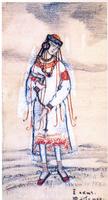
Girl
Nicholas Roerich
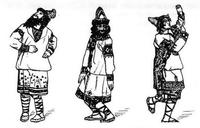
The Rite of Spring
Nicholas Roerich
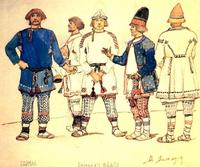
Timber and Berendeys guys
Viktor Vasnetsov
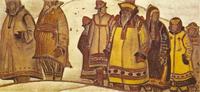
The scene with eight figures in costumes
Nicholas Roerich
Kupava
Viktor Vasnetsov
Illustration for the Russian Fairy Story "Maria Morevna"
Ivan Bilibin
Girl
Nicholas Roerich
Solveig
Nicholas Roerich
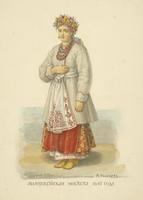
Little Russian bride
Fyodor Solntsev
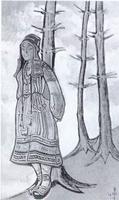
Girl
Nicholas Roerich
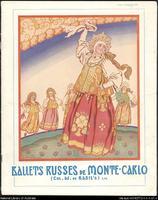
Poster of Russian Ballet
Ivan Bilibin
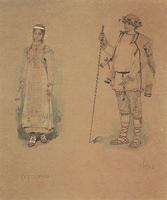
Snegurochka and Lel
Viktor Vasnetsov
Two girls
Nicholas Roerich
Old man
Nicholas Roerich