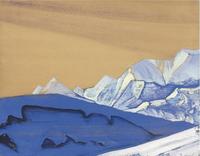
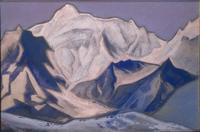
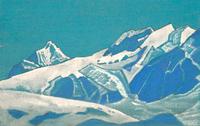
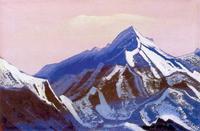
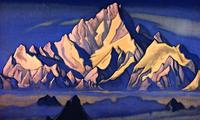
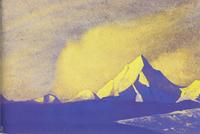
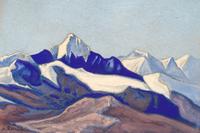
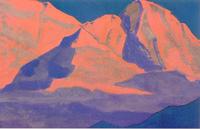
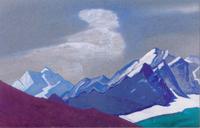
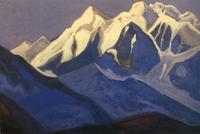
Based solely on the provided facts—that "Tibet" by Nicholas Roerich is a landscape painted in the Symbolist style—the artwork’s significance lies in how it exemplifies the core aims of Symbolism through the landscape genre. In Symbolism, landscapes are rarely literal depictions; instead, they serve as vehicles for spiritual or emotional expression. Here, the subject of Tibet—a region often associated with mysticism and high, remote terrain—amplifies this tendency. The painting likely transforms a natural view into a symbolic vision, using color, composition, and atmosphere to evoke a sense of the sublime or the sacred. This makes the work significant as a pure example of Symbolist landscape, where the external world becomes a mirror for inner states and transcendent ideas.