
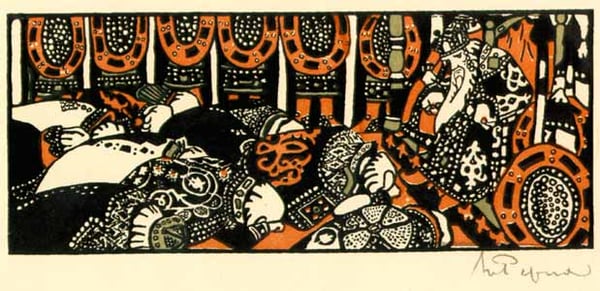
Analisi esperta di Tsar di Nicholas Roerich
Stile: Art Nouveau (Modern) · Genere: genre painting
Expert Analysis of "Tsar" by Nicholas Roerich
Nicholas Roerich’s Tsar is a significant example of how Art Nouveau—often associated with decorative, organic forms and a modern sensibility—could be adapted to the genre of historical or everyday-life painting. While the artwork is classified as a genre painting (depicting a scene from daily life or a recognizable figure), its importance lies in the synthesis of two seemingly distinct impulses: the modernist, linear elegance of Art Nouveau and the narrative weight of a royal subject.
Within the Art Nouveau (Modern) context, Roerich would have employed the movement’s characteristic sinuous lines, flattened pictorial space, and harmonious, often symbolic color palettes. The figure of a tsar—a traditional emblem of power, ceremony, and “Old Russia”—is filtered through this contemporary lens, creating a work that is at once rooted in national identity and forward-looking in its design. The significance emerges from this tension: Roerich does not simply illustrate a historical figure; he reimagines the tsar as a stylized, almost mythic presence, where decorative surface and symbolic form take precedence over strict realism.
This approach aligns with the broader Art Nouveau goal of integrating art into everyday life and elevating applied aesthetics. By treating a genre painting of a tsar with the same decorative refinement found in the movement’s posters, furniture, and architecture, Roerich asserts that even the most traditional subjects can be revitalized through modern artistic language. The work thus stands as a testament to Art Nouveau’s versatility and its ability to bridge cultural heritage with contemporary innovation—a hallmark of Roerich’s own career as a painter, set designer, and philosopher.
Visivamente simili
20 opere con composizione e palette affini
Tsar
Nicholas Roerich
Illustration for Alexander Pushkin's 'Fairytale of the Tsar Saltan'
Ivan Bilibin
Merchants. Illustration for Alexander Pushkin's 'Fairytale of the Tsar Saltan'
Ivan Bilibin
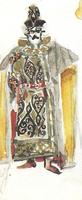
Fist-fighter (Costume design for the opera "The Enchantress")
Mikhail Vrubel
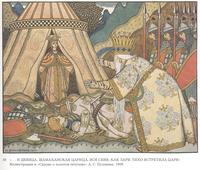
Illustration for the poem 'The Tale of the Golden Cockerel' by Alexander Pushkin
Ivan Bilibin
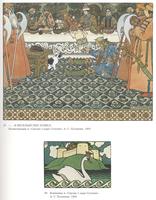
Illustration for Alexander Pushkin's 'Fairytale of the Tsar Saltan'
Ivan Bilibin
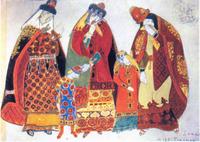
Boyarynia and children
Nicholas Roerich
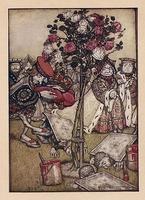
The Queen turned angrily away from him and said to the Knave, 'Turn them over'
Arthur Rackham
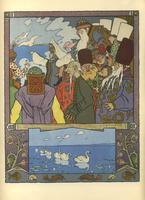
Illustration for the Russian Fairy Story "The Frog Princess"
Ivan Bilibin
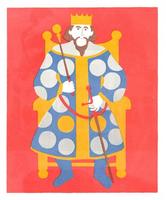
Illustration to Daniil Kharms' book "Fairy Tale"
Hryhorii Havrylenko
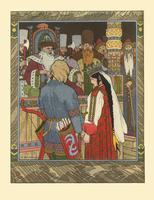
Illustration for the Tale of Prince Ivan, The Firebird and the Grey Wolf
Ivan Bilibin
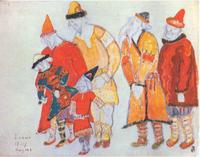
People
Nicholas Roerich
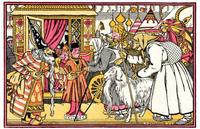
Illustration for the tale "Wooden Prince" by Alexander Roslavlev
Ivan Bilibin
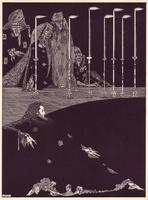
Tales of Mystery and Imagination by Edgar Allan Poe
Harry Clarke
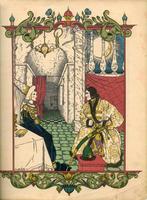
Illustration to 'Wooden Eagle'
Heorhiy Narbut
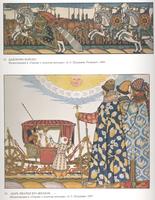
Illustration for the poem 'The Tale of the Golden Cockerel' by Alexander Pushkin
Ivan Bilibin
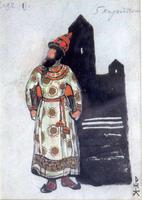
Boyarin
Nicholas Roerich
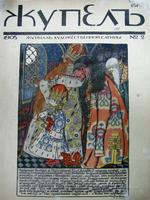
Magazine Cover Bugbear
Ivan Bilibin
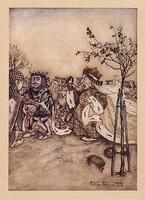
The Queen never left off quarrelling with the other players, and shouting 'Off with his head!' or, 'Off with her head!'
Arthur Rackham
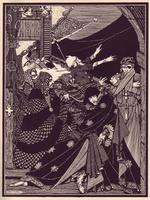
Tales of Mystery and Imagination by Edgar Allan Poe
Harry Clarke