
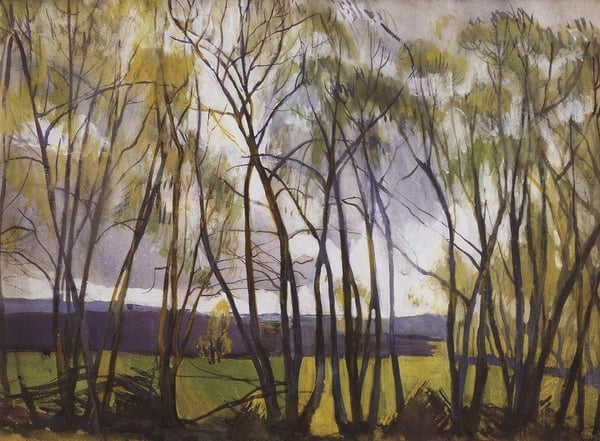
Analisi esperta di Before the Storm (Village Neskuchnoye) di Zinaida Serebriakova
Stile: Impressionism · Genere: landscape
Expert Analysis of "Before the Storm (Village Neskuchnoye)" by Zinaida Serebriakova
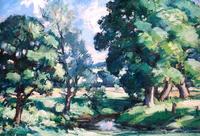
Zinaida Serebriakova’s Before the Storm (Village Neskuchnoye) is a striking Impressionist landscape that captures a fleeting, charged moment in the Russian countryside. Painted during her mature period in the early 1910s, the work exemplifies how Serebriakova synthesized French Impressionist techniques with a distinctly Russian sense of place and emotional intensity.
Significance within Impressionism and Serebriakova’s Oeuvre:
-
Mastery of Atmosphere and Light – Serebriakova demonstrates the core Impressionist preoccupation with transient natural conditions. The “before the storm” moment is rendered with swift, visible brushstrokes that convey the shifting light and the oppressive weight of the gathering clouds. The sky’s livid greens and deep grays contrast with the warm, sunlit patches on the village roofs, creating a dramatic tension that is both physical and psychological.
-
Personal and National Identity – Neskuchnoye was the Serebriakova family estate in present-day Ukraine. By choosing this intimate, known landscape, she infuses the scene with personal memory and a deep attachment to rural life. Unlike many French Impressionists who focused on urban leisure, Serebriakova’s landscapes often depict peasant villages, fields, and the rhythms of nature—a contribution that expanded Impressionism’s thematic range to include the Russian agrarian world.
-
Female Perspective in a Male-Dominated Movement – Serebriakova was one of the few prominent women of the Russian Impressionist circle. Her ability to capture both the grandeur and the quiet vulnerability of the landscape before a storm subtly reflects a distinctive viewpoint: the storm’s approach feels less heroic and more apprehensive, mirroring the societal uncertainties of early 20th-century Russia.
-
Technique and Break from Academic Conventions – The painting’s sketchy, loose handling and emphasis on color over line align with the Impressionist break from academic realism. Yet Serebriakova retains a solid sense of structure—the church dome and clustered houses anchor the composition. This balance between dissolution and form is a hallmark of her style and helps distinguish Russian Impressionism from its Western counterparts, which often pursued more radical abstraction.
Conclusion:
“Before the Storm” is significant because it embodies the hybrid nature of Russian Impressionism—applying Parisian ideas about light and atmosphere to native subjects, while also asserting a unique, female-grounded emotional intimacy. The painting stands as a testament to Serebriakova’s skill in turning a simple rural scene into a premonitory drama, capturing a universal moment of nature’s tension through a deeply personal lens.
Visivamente simili
20 opere con composizione e palette affini
Autumn Landscape
Zinaida Serebriakova
Sketch for Opulent October
Tom Thomson
The tree in early spring (The Gaza field in Karlovac) en plein air
Alfred Freddy Krupa
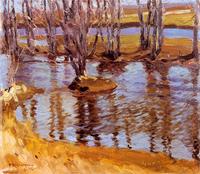
Krajobraz
Ferdynand Ruszczyc
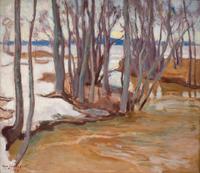
Kevättulva Tuusulanjärvellä
Eero Järnefelt
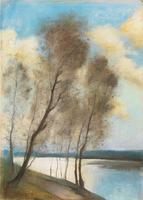
Spring
Lesser Ury
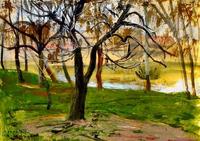
Czene Béla Szolniki Zagyva Part
Czene Béla
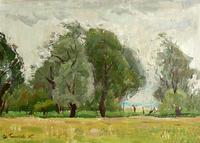
Landscape
Sergiy Grigoriev
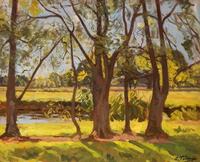
Ringwood Glade
Algernon Talmage
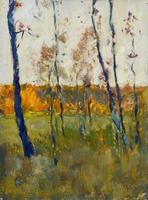
Autumn
Isaac Levitan
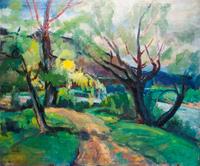
A Road Along the River
Adalbert Erdeli
Ruisseau
Marcel Charlet
Autumn evening. Trail in the forest.
Isaac Levitan
Koncha Ozerna
Victor Zaretsky
Autumn. Birches.
Isaac Levitan
The Brook
Paul Cezanne
Landscape
Sergiy Grigoriev
Large Trees at Jas de Bouffan
Paul Cezanne
House in Spring
Naser Ramezani
New Abbey, Dumfriesshire
Samuel Peploe