Expert analysis of Zinaida Serebriakova’s Moor
Style: Art Deco · Genre: portrait
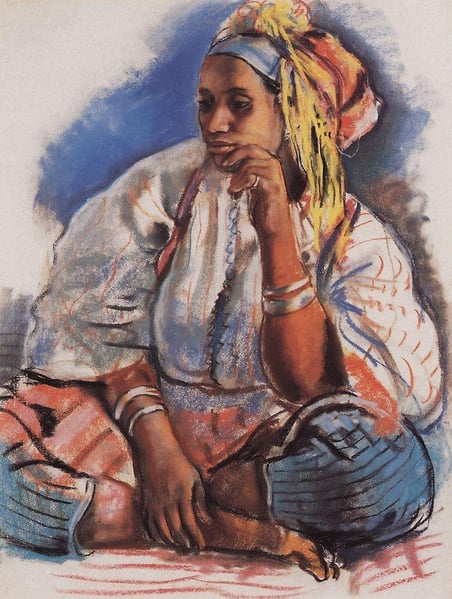
Expert Analysis of "Moor" by Zinaida Serebriakova
Zinaida Serebriakova’s “Moor” stands as a compelling example of Art Deco portraiture, a style defined by its sleek geometry, refined elegance, and decorative exoticism. Executed in the 1920s—the peak of the Art Deco movement—this work fuses the era’s love for bold, stylized forms with the intimate tradition of portrait painting.
Significance within Art Deco:
The painting embodies Art Deco’s characteristic fusion of modernity and ornament. The subject’s features are rendered with smooth, simplified contours and a sense of streamlined sophistication, echoing the period’s fascination with speed, luxury, and non-Western motifs. The “Moor” figure—a term historically used in European art to denote a North African or Black subject—reflects Art Deco’s appropriation of exotic and colonial themes, a common device in fashion, design, and painting of the 1920s. Serebriakova, however, elevates the genre by imbuing the sitter with quiet dignity and psychological depth, moving beyond mere decorative type.
Significance within the Portrait Genre:
As a portrait, “Moor” demonstrates Serebriakova’s mastery of capturing character through posture and gaze. The composition likely employs the Art Deco vocabulary of sharp diagonals, rich color contrasts, and a sense of hierarchical balance. Unlike many contemporary Orientalist portraits that reduce the subject to an exotic prop, Serebriakova’s work—true to her Russian Realist training—retains a compassionate observation. The figure’s direct or serene expression suggests a presence that resists stereotyping, making the painting a nuanced intersection of high-style modernism and humanistic portraiture.
Overall Legacy:
“Moor” is significant for its ability to synthesize Art Deco’s decorative exuberance with a timeless portrait sensibility. It exemplifies how Serebriakova, a woman artist navigating a male-dominated art world, could appropriate a popular style without losing the empathetic core that defines her best works. This painting not only captures the spirit of its era but also challenges the viewer to see beyond surface exoticism, securing its place as a thoughtful contribution to early 20th-century portraiture.
Visually similar
20 works with related composition and palette
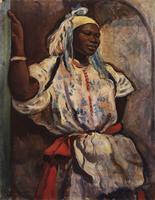
Moroccan woman in white
Zinaida Serebriakova
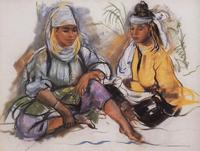
Two Moroccan
Zinaida Serebriakova
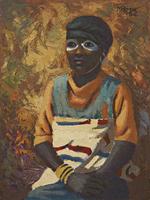
Xhosa woman
George Pemba
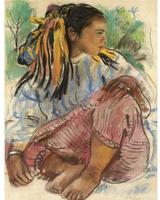
Portrait of a young girl. Marrakesh
Zinaida Serebriakova
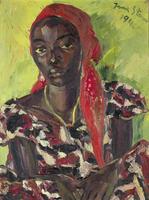
Congolese Beauty
Irma Stern
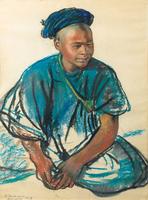
Portrait of a young Moroccan
Zinaida Serebriakova
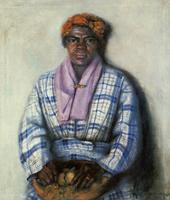
Mammy
Archibald Motley
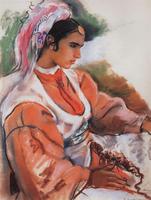
Young Moroccan
Zinaida Serebriakova
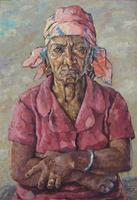
Untitled (Portrait)
Albert Huie
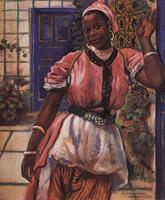
Moroccan woman wearing a pink dress
Zinaida Serebriakova
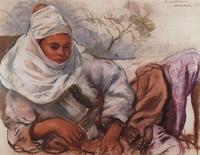
A young woman in a white headdress
Zinaida Serebriakova
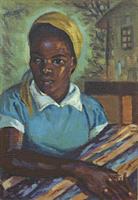
Girl with firewood
George Pemba
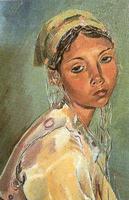
"Bride" (1937) (Detail)
Nikola Martinoski
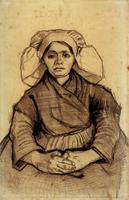
Seated Woman
Vincent van Gogh
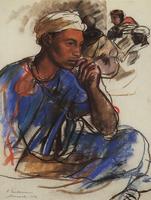
Thoughtful men in blue. Marrakesh
Zinaida Serebriakova
Portrait of a woman
Leopold Muller
The woman from ciociaria
Luigi Da Rios
Tête de jeune fille
António de Carvalho da Silva Porto
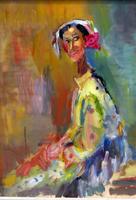
Aisha
Nikola Martinoski
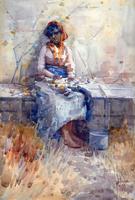
Maori Girl
Frances Hodgkins