Analisi esperta di Portrait of a Man di Zinaida Serebriakova
Stile: Expressionism · Genere: portrait
Expert Art Historical Analysis: "Portrait of a Man" by Zinaida Serebriakova
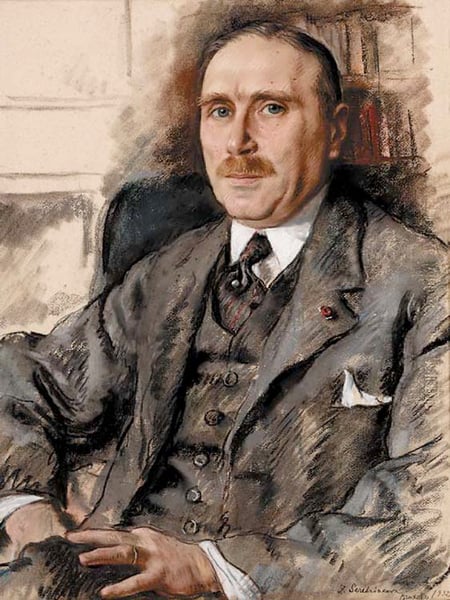
Zinaida Serebriakova (1884–1967) is celebrated for her luminous, intimate portraits that often blend a refined realism with a lyrical sensitivity. However, this work is categorized under Expressionism—a departure from her more familiar naturalistic style. Within that context, Portrait of a Man gains significance as a subtle but powerful exploration of psychological interiority, achieved through the expressive techniques typical of the movement.
Stylistic Significance within Expressionism: Unlike the more overtly distorted or violently emotional canvases of German Expressionists (e.g., Kirchner or Nolde), Serebriakova’s expressionism is restrained and psychological. The sitter’s identity remains unknown, which forces the viewer to focus solely on the emotional state conveyed through:
- Color as emotion: Expressionist portraits often use non-naturalistic hues to depict mood. Here, the palette likely intensifies the sitter’s inner tension—cool shadows or warm highlights that suggest melancholy, introspection, or unease.
- Brushwork and texture: Visible, energetic strokes (rather than smooth blending) create a sense of immediacy and raw feeling, inviting the viewer to engage with the subject’s live psychological presence.
- Compositional focus: The man’s face and eyes are central, often rendered with a direct, unsettling gaze that breaks the fourth wall, typical of Expressionist portraiture’s aim to reveal the soul.
Placement in Serebriakova’s Oeuvre and Historical Context: Serebriakova worked through a period of immense upheaval—the Russian Revolution, exile, and life in Paris. While she is primarily associated with the Russian realist tradition (e.g., Bathhouse or her self-portraits), her later works, especially those in France, show an absorption of Post-Impressionist and Expressionist influences. This portrait likely represents a synthesis:
- It retains her signature psychological depth (a hallmark of her portraiture) but channels it through modernist anxiety rather than serene observation.
- As a female artist in a male-dominated modernist landscape, Serebriakova’s expressionism asserts a distinctively feminine gaze—more empathetic and intimate than the often-aggressive male Expressionist output.
Significance as a Genre Piece: The portrait genre, under Expressionism, abandons mere likeness in favor of truth to inner experience. Portrait of a Man matters because it bridges Serebriakova’s academic training with the avant-garde, proving that Expressionism could be delicate and piercingly personal, not just loud and jarring. It documents a transitional moment in her career—and in early 20th-century art—where emotion becomes the primary subject, even in a quiet, unnamed face.
Visivamente simili
20 opere con composizione e palette affini
Portrait of the industrialist and MP Max Friedmann
John Quincy Adams
Fred Grover
Anna Airy
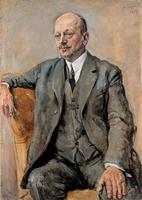
Portrait of Julius Freund
Max Slevogt
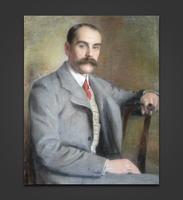
Portrait noble
Paul Mathiopoulos
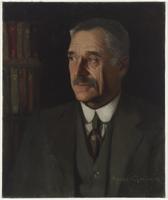
Andrew Barton "Banjo" Paterson
Agnes Goodsir
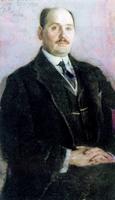
Self-Portrait
Nikolay Bogdanov-Belsky
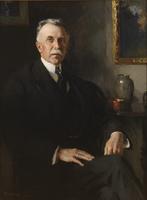
Portrait of Isaac C. Bates, Esq.
Frank W. Benson
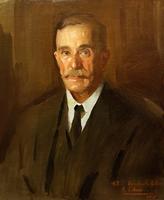
Rafael Domènech i Gallissà
Alejandro Cabeza
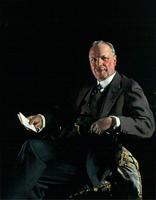
Sir Thomas Jaffrey, Bt, LLD, Chairman of Aberdeen Art Gallery Committee
William Orpen
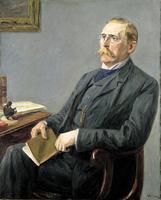
Portrait of Wilhelm Bode
Max Liebermann
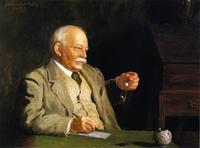
William Dean Howells
Lilla Cabot Perry
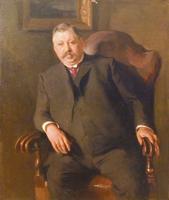
Autoportret Zenkow, Semyon
Zenkow, Semyon Nikolaevich
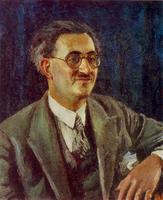
Portrait of Lo Gatto Ettore
Igor Grabar
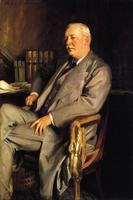
The Earle of Comer
John Singer Sargent
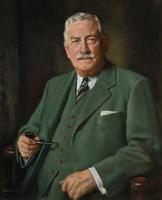
Sir Archibald Boyd
David Jagger
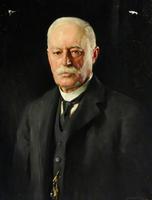
Henry Hall Bedford, JP, Chairman of the Board (1913–1924)
David Jagger
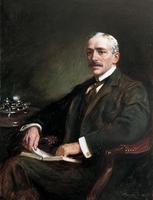
John Howard, Esq., JP, DL of Sibton and Chartham, MP for Northeast Kent (1902–1908)
Albert Chevallier Tayler
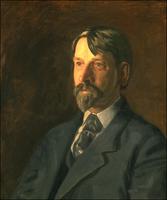
Portrait of Dr. Albert C Getchell
Thomas Eakins
Ernest Lee Parker
Thomas Eakins
Portrait of Yanka Kupala
Nikolay Bogdanov-Belsky