
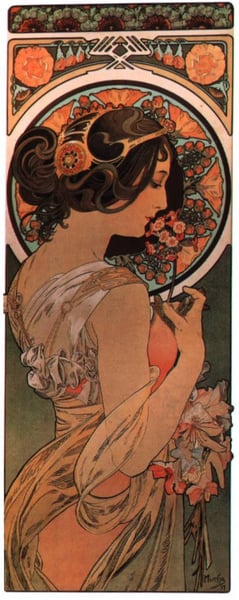
Alphonse Mucha の Cow slip の専門的な分析
スタイル:Art Nouveau (Modern) · ジャンル:portrait
An expert analysis of Alphonse Mucha’s Cow slip must ground itself in the defining features of Art Nouveau and Mucha’s signature approach to portraiture. While the artwork’s title evokes the delicate primrose—often called “cowslip”—Mucha’s true subject is the idealization of feminine beauty within a harmonious, ornamental universe.
Key characteristics that make Cow slip significant within Art Nouveau:
-
Whiplash curves and organic linework: Mucha’s style is instantly recognizable for its sinuous, flowing contours. In Cow slip, these lines would likely define the woman’s hair, the folds of her drapery, and the stems or petals of the surrounding flora. This rhythmic, “whiplash” line is the visual grammar of Art Nouveau, symbolizing nature’s vitality.
-
The “Mucha Woman” as icon: Mucha elevated the female portrait into a decorative archetype. His subjects are serene, ethereal, and often haloed by stylized botanical elements—here, presumably the cowslip flowers. This figure is not a realistic portrait but a symbolic embodiment of grace and natural beauty, rendered with idealized features and a contemplative expression.
-
Flat, decorative patterning: Art Nouveau rejected deep perspective in favor of flat, tapestry-like compositions. Cow slip would employ a shallow space, where the woman and the floral motifs exist on the same plane, united by a decorative border or arched frame. Mucha often used mosaic-like backgrounds or gilded halos, lending the work a sacred, almost Byzantine elegance.
-
Symbolism and nature: The cowslip flower carries connotations of spring, youth, and tenderness—themes Mucha consistently wove into his work. By merging the female form with this specific bloom, he creates a visual metaphor: woman as a flower, delicate and ephemeral, rooted in the natural world. This anthropomorphic connection between figure and flora is central to Art Nouveau’s philosophy.
Significance within Mucha’s oeuvre and the period:
-
Cow slip exemplifies Mucha’s mature period, when he moved from theatrical posters to more intimate, decorative panels. These works were mass-produced as prints, bringing high-art aesthetics into domestic interiors—a democratic impulse typical of the fin de siècle.
-
Mucha’s portraits (though often pseudo-portraits of unnamed muses) redefined the role of ornament. His use of intricate floral frames, pale pastels, and gold highlights transformed the portrait from a mere likeness into a complete, immersive decorative object.
-
The artwork stands as a testament to Art Nouveau’s obsession with “total art”—where every line, color, and motif serves the unified whole. In Cow slip, the woman is not separate from the flowers; she is the flower, rendered in the same sinuous, stylized vocabulary. This synthesis of human and botanical form is what makes Mucha’s work a cornerstone of the Modernist decorative tradition.
In short, Cow slip is significant not for its narrative or psychological depth, but for its role as a quintessential Art Nouveau icon: a serene, stylized portrait that transforms the female figure into a living ornament, fused with floral symbolism and executed with a masterful, linear grace that defined an era.
視覚的に類似
構図やパレットが近い作品 20 件
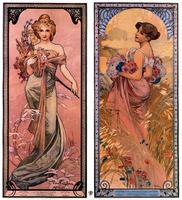
The seasons (Spring, Summer)
Alphonse Mucha
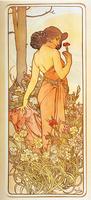
Carnation
Alphonse Mucha
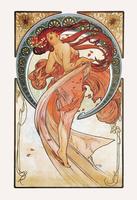
The Arts: Dance
Alphonse Mucha
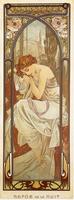
Night’s Rest
Alphonse Mucha
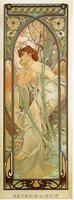
Evening Contemplation
Alphonse Mucha
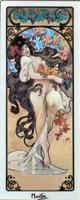
Amethyst
Alphonse Mucha
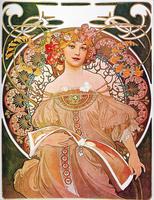
Daydream
Alphonse Mucha
Evening reverie (nocturnal slumber)
Alphonse Mucha
Calendar Champagne
Alphonse Mucha
Music
Alphonse Mucha
Rose
Alphonse Mucha
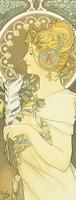
The Quill
Alphonse Mucha
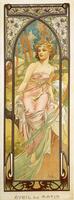
Morning Awakening
Alphonse Mucha
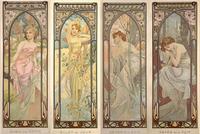
The Times of the Day
Alphonse Mucha
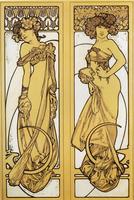
Two Standing Women
Alphonse Mucha
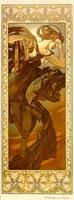
The Evening Star
Alphonse Mucha
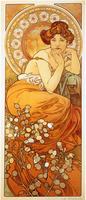
Topaz
Alphonse Mucha
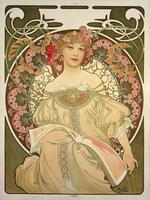
Reverie
Alphonse Mucha
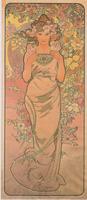
The rose
Alphonse Mucha
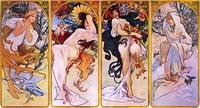
Cropped print of four panels each depicting one of the four seasons personified by a woman
Alphonse Mucha