Analisi esperta di Dusk di Alphonse Mucha
Stile: Art Nouveau (Modern) · Genere: genre painting
Expert Analysis of "Dusk" by Alphonse Mucha
Style and Context
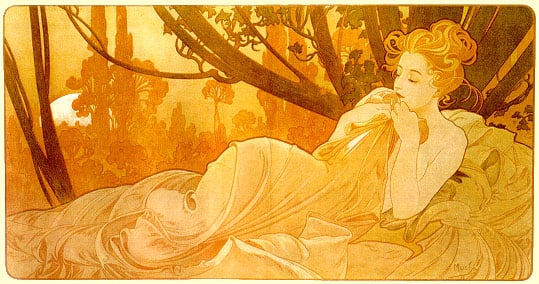
As a quintessential Art Nouveau work, Alphonse Mucha’s "Dusk" exemplifies the movement’s defining fusion of fine art, decorative design, and symbolic naturalism. Created during his iconic poster period (c. 1899), it belongs to his series The Times of the Day, which also includes Morning, Day, and Evening. This series showcases Mucha’s signature approach: elevating genre painting into a harmonious blend of beauty, symbolism, and ornamental elegance.
Composition and Subject
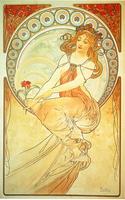
The painting centers on a serene, idealized female figure—Mucha’s archetypal femme nouvelle—whose flowing hair, draped garments, and languid pose embody the transitional mood of dusk. She is surrounded by stylized flora and a halo-like backdrop of lingering sunset hues. The figure’s half-closed eyes and serene expression suggest a moment of quiet introspection, aligning with the theme of the day’s end. Mucha’s use of sinuous, rhythmic lines (the arabesque) guides the viewer’s eye through the composition, creating a sense of organic flow that is central to Art Nouveau design.
Significance within Art Nouveau
"Dusk" is significant for its masterful integration of multiple artistic principles that define the Art Nouveau style:
- Decorative Synthesis: Mucha blurs the boundary between fine art and applied arts. The painting’s flattened perspective, decorative borders, and repetitive natural motifs (such as curling vines or petals) anticipate its use as a poster or panel, reflecting the movement’s goal of beautifying everyday life.
- Emblematic Symbolism: Dusk here is not merely a time of day but a symbolic threshold—between light and dark, activity and rest. Mucha’s female figure becomes a personification of nature’s cycles, a common Art Nouveau trope that elevates genre painting to allegorical expression.
- Linear Elegance: The flowing, whiplash curves of the woman’s hair and the surrounding foliage are hallmarks of Mucha’s style. These lines unify the composition and create a visual rhythm that is both decorative and expressive, influencing graphic design, architecture, and illustration across Europe.
Legacy
"Dusk" remains a touchstone for understanding how Art Nouveau transformed commercial art into high art. Mucha’s ability to infuse a simple genre scene with transcendent grace and symbolic depth—while retaining the accessibility of a poster—marks the work as a definitive statement of modern fin-de-siècle aesthetics. Its serene, meditative quality also prefigures the later Symbolist and decorative trends of the early 20th century, cementing Mucha’s role as a pioneer of visual harmony.
Visivamente simili
20 opere con composizione e palette affini
Dawn
Alphonse Mucha
Night’s Rest
Alphonse Mucha
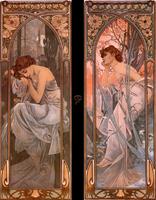
Evening reverie (nocturnal slumber)
Alphonse Mucha
Carnation
Alphonse Mucha
Silver
Albert Joseph Moore
Music
Alphonse Mucha
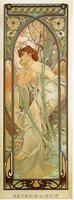
Evening Contemplation
Alphonse Mucha
Morning Awakening
Alphonse Mucha
Mayflyes
Raphael Kirchner
Flaming June
Frederic Leighton
Cymon and Iphigenia
Frederic Leighton
The Evening Star
Alphonse Mucha
Calendar Champagne
Alphonse Mucha
Nyads and Dryads
Walter Crane
Novem
Alphonse Mucha
Selene and Endymion
Edmund Dulac
The Autumn
Alphonse Mucha
Spring
Alphonse Mucha
Painting
Alphonse Mucha
Mythological scene with a couple and a child
Diogène Maillart