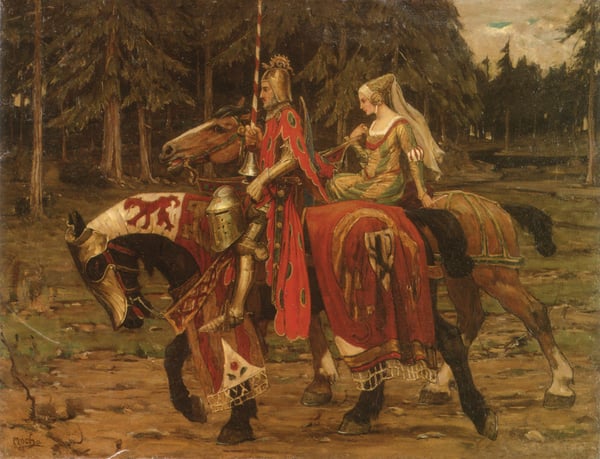
Heraldic Chivalry
Expert analysis of Alphonse Mucha’s Heraldic Chivalry
Style: Romanticism · Genre: genre painting
Expert Analysis of "Heraldic Chivalry" by Alphonse Mucha
While Alphonse Mucha is most widely celebrated as a defining figure of Art Nouveau, the work "Heraldic Chivalry"—designated here as a Romanticist genre painting—offers a fascinating window into the artist’s engagement with historical narrative and idealized emotion. In this piece, Mucha steps away from his signature decorative panels of ethereal women and instead channels the Romanticist fascination with the medieval past, chivalric codes, and heroic grandeur.
The painting’s significance within Romanticism lies in its use of heraldic symbolism and theatrical composition to evoke a bygone era of honor and legend. Genre painting, traditionally focused on scenes of everyday life, is here elevated to a stage for moral and emotional drama: the knight’s armored figure, the intricate coat of arms, and the dramatic lighting all align with Romanticism’s preference for intense, subjective experience over neoclassical restraint. Mucha’s handling of detail—the gleam of metal, the weight of velvet drapes—grounds the fantasy in a tactile, almost palpable reality, inviting the viewer to participate in the romance of history.
The work is significant as a testament to Mucha’s versatility; even when adhering to a different stylistic framework (Romanticism rather than his own Art Nouveau), he brings a meticulous sense of ornamentation and theatricality. "Heraldic Chivalry" stands as a bridge between the lofty ideals of Romanticist history painting and the intimate accessibility of genre scenes, proving that Mucha’s genius could transcend any single movement.
Visually similar
20 works with related composition and palette
Flight of Charles the Bold
Eugène Burnand
The Beautiful Lady Without Pity (La Belle Dame Sans Merci)
Frank Dicksee
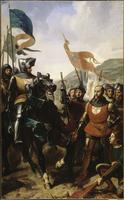
Duguesclin Cocherel
Charles-Philippe Lariviere
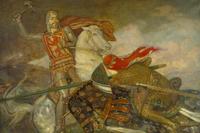
Bruce and De Bohun
John Duncan
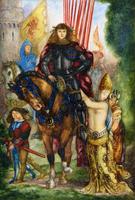
Rea and Captives
Gustave Moreau
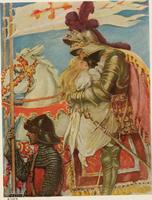
The Princess and the Goblin
Jessie Willcox Smith
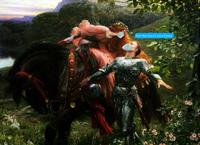
Adoration During The Corona Pandemic
Muntadher Saleh
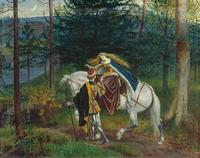
La belle Dame Sans Merci
Walter Crane
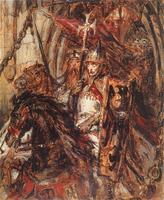
Henryk Pobozny
Jan Matejko
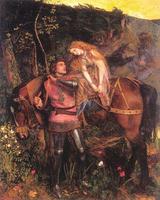
The Beautiful Lady Without Pity
Arthur Hughes
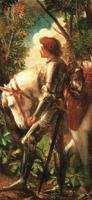
Sir Galahad
George Frederick Watts
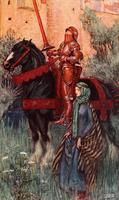
Yniol's rusted arms
Eleanor Fortescue-Brickdale
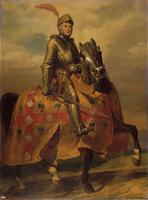
André de Lohéac (1408-1485)
Éloi Firmin Féron
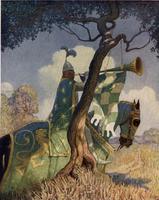
The green knight preparing to battle Sir Beaumains
N.C. Wyeth
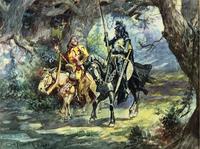
Knight and Jester
Charles M. Russell
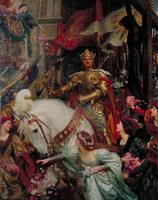
The Two Crowns
Frank Dicksee
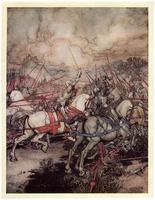
King Arthur for the first time draws his sword Excalibur from its sheath
Arthur Rackham
Adoration During The Corona Pandemic
Muntadher Saleh
The battle of Issus(fragment)
Albrecht Altdorfer
A Knight and Cupid Before a Castle Door
Eleanor Fortescue-Brickdale