Analisi esperta di The Farmer di Joan Miro
Stile: Fauvism · Genere: genre painting
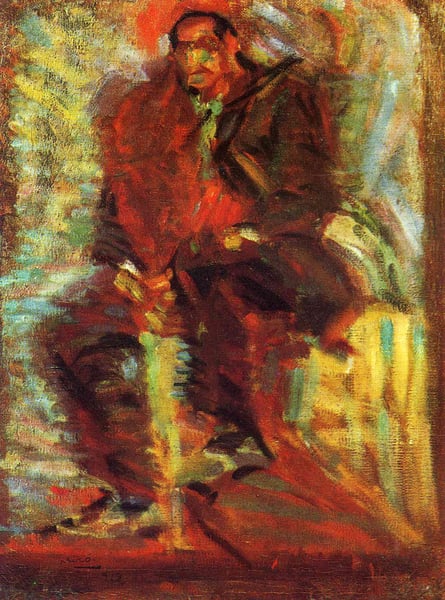
Based on the structured facts provided, "The Farmer" by Joan Miró is analyzed as a work within the Fauvist style and the genre painting category. While Miró is more famously associated with Surrealism, this early work is significant as an example of how he engaged with the radical color and form of Fauvism before developing his own mature, biomorphic vocabulary.
Significance within Fauvism:
The painting embodies the core Fauvist principles of using intense, non-naturalistic colors and energetic, simplified shapes to convey emotional intensity rather than realistic representation. The subject—a farmer—is not depicted with careful modeling or perspective; instead, bold areas of flat, vibrant hues (likely reds, yellows, greens, and blues) create a sense of raw vitality. This aligns with Fauvism's break from Impressionist subtlety and its embrace of painterly expression, as pioneered by Matisse and Derain. Miró's treatment of the figure likely distills the farmer's form into rhythmic, almost decorative planes, emphasizing the artist's subjective reaction to the rural scene.
Significance as a Genre Painting:
As a genre painting—a scene from everyday life—"The Farmer" situates Miró within a tradition of depicting rural laborers, but reimagines it through a modernist lens. Instead of sentimental or anecdotal realism, the Fauvist approach transforms the farmer into an icon of earthy energy. The work's significance lies in its bridge between traditional subject matter and avant-garde experimentation: it uses a familiar, humble theme to test the limits of color and composition, prefiguring Miró's later interest in agrarian motifs (e.g., "The Tilled Field").
Overall Significance:
"The Farmer" is a crucial early example of Miró's engagement with Fauvism, demonstrating how he absorbed its lessons in liberating color and form. It stands as a testament to the artist's willingness to apply radical stylistic innovations to ordinary subject matter, ultimately paving the way for his own unique, surreal vocabulary. In the context of Fauvism, it represents the movement's reach into Spanish modernism, while as a genre painting, it revitalizes a timeless theme with explosive, modernist energy.
Museum / Gallery
Visivamente simili
20 opere con composizione e palette affini
Japanese Girl
Hans Hofmann
Portrait of Peasant
Paul Cezanne
Man Sitting
Mario Sironi
Portrait of An Armenian Artist V. Akhikyan
Fedir Krychevsky
Old Man
Laszlo Mednyanszky
Czóbel Béla Szakállas Férfi
Bela Czobel
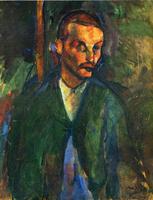
The beggar of Livorne
Amedeo Modigliani
Portrait of Clemenceau
Eugene Carriere
Man Waiting
Ottone Rosai
The Comb
Edouard Vuillard
The guy
Frantisek Kupka
The blue jacket
Mario Sironi
The Sailor
Paul Cezanne
Study for the Portrait of F. R. Leyland
James McNeill Whistler
Homme Assis
Henri Matisse
Woman in a Chair
L. S. Lowry
Portrait
George Bouzianis
Arnold Schönberg
Oskar Kokoschka
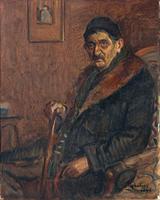
Portrait of Ibnul Emin Mahmut Kemal
Feyhaman Duran
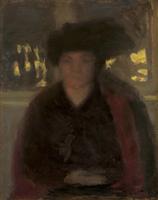
Portrait of Rosa Schleichkorn
Wojciech Weiss