Expert Analysis: Dantis Amor by Dante Gabriel Rossetti
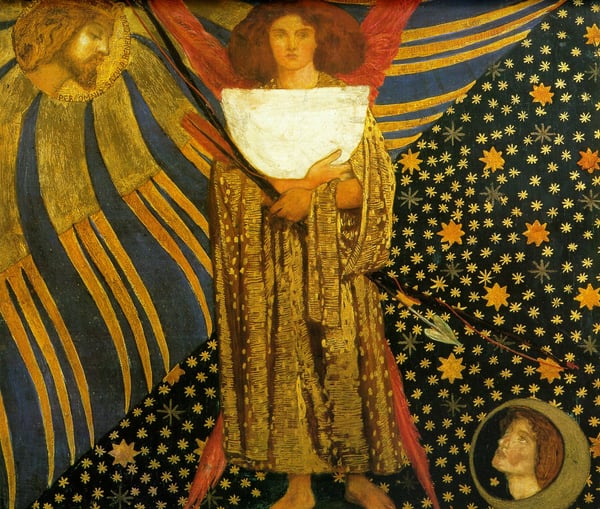
As a literary painting created within the Symbolist style, Dantis Amor stands as a quintessential example of Rossetti’s ability to fuse poetic narrative with visual allegory. The work’s significance lies in its embodiment of Symbolism’s core ambition: to transcend literal representation through evocative, often esoteric imagery drawn from literature.
By centering on the figure of Dante—the quintessential poet of transcendent love—Rossetti transforms the canvas into a meditation on spiritual longing and divine beauty. The painting does not merely illustrate a scene; it conjures a symbolic realm where earthly passion and heavenly ideal merge. This approach aligns perfectly with Symbolism’s rejection of realism in favor of suggestion, mood, and the inner life of the soul.
Within the broader arc of Symbolist art, Dantis Amor is significant because it demonstrates how literary source material can be used to unlock universal themes—love, loss, and redemption—while maintaining the movement’s characteristic aesthetic of intricate detail, rich color, and dreamlike composition. Rossetti’s work here is not just a homage to Dante; it is a manifesto for Symbolist painters who sought to elevate art from mere observation to profound, symbolic storytelling.