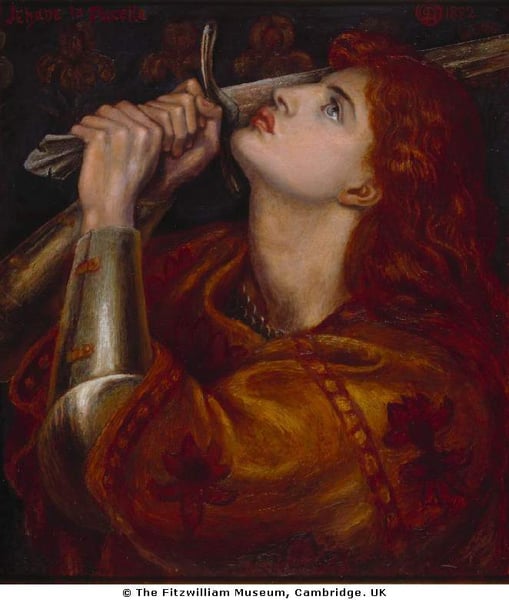
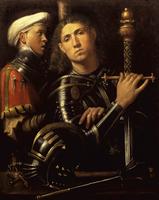
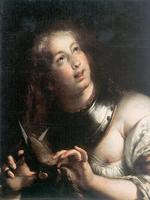
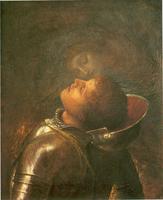
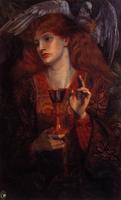
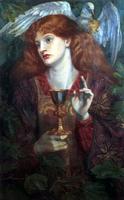
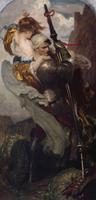
As a Romantic history painting, Dante Gabriel Rossetti's Joan of Arc derives its significance from the artist's ability to fuse the grandeur of historical narrative with the emotional intensity and individualism characteristic of the Romantic style. The work elevates Joan of Arc from a mere historical figure into a symbol of spiritual conviction and tragic heroism, investing her story with a dramatic, almost mystical aura. Within Romanticism, this painting stands out for its focus on the inner life and moral struggle of its subject rather than on didactic or academic history painting. Rossetti’s treatment—likely emphasizing rich color, expressive gesture, and a sense of medieval revival—aligns the piece with Romanticism’s fascination with the Middle Ages and with figures who defy convention through personal faith and courage. In the genre of history painting, which traditionally celebrated classical or national subjects, Rossetti’s choice of a young female martyr adds a layer of poignant vulnerability, making the work significant for its humanization of a legendary icon while adhering to Romantic ideals of passionate, individual experience.