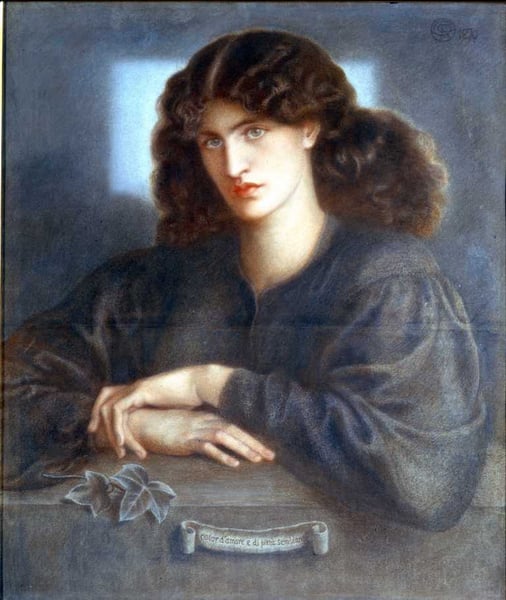
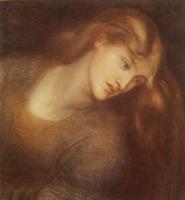
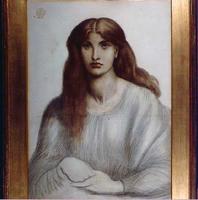
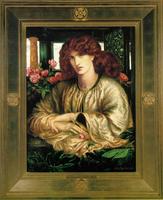
Based solely on the provided facts—artwork “The Lady of Pity” by Dante Gabriel Rossetti, style Romanticism, genre literary painting—the significance of this work lies in its embodiment of Romanticism’s deep engagement with narrative and emotion through literary sources. As a literary painting, it bridges visual art and written text, a hallmark of Romanticism that prioritizes personal feeling, imagination, and often medieval or symbolic themes. Rossetti, a central figure in the Pre-Raphaelite movement (which emerged from Romanticism), used such works to fuse poetic subject matter with meticulous detail and intense emotional resonance. “The Lady of Pity” thus stands as a key example of how Romantic literary painting transforms abstract or allegorical ideas from literature into a vivid, evocative visual experience, reinforcing the period’s belief in art as a vehicle for profound human sentiment.