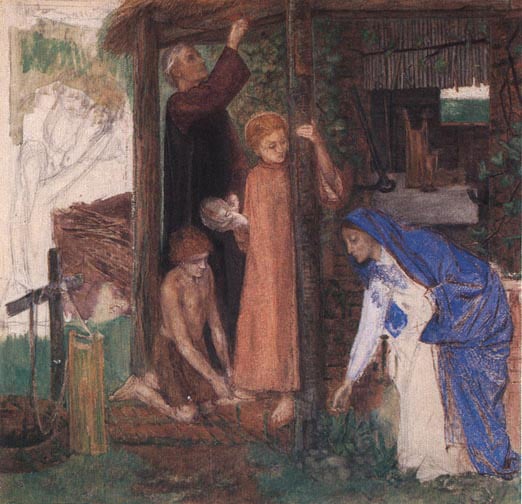
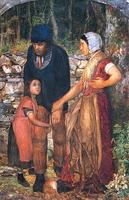
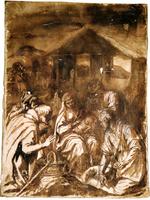
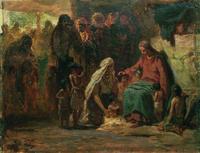
"The Passover in the Holy Family Gathering Bitter Herbs" by Dante Gabriel Rossetti is a compelling example of Romanticism's turn toward intimate, emotionally charged religious narrative. Painted within the broader Romantic fascination with medieval and Christian themes, Rossetti infuses a familiar biblical moment—the Holy Family preparing bitter herbs for the Passover meal—with tender domesticity and symbolic resonance.
The work’s significance lies in Rossetti’s departure from grandiose, distant depictions of sacred scenes. Instead, he focuses on a quiet, almost mundane ritual, inviting viewers to contemplate the humanity of the Holy Family. The bitter herbs themselves carry dual meanings: they recall the suffering of the Israelites in Egypt and foreshadow Christ’s own bitterness to come. By placing this moment in a humble, intimate setting, Rossetti aligns Romanticism’s emphasis on personal, emotional experience with a reimagined sacred history—one that is accessible, poignant, and deeply felt. This blending of spiritual symbolism and earthly tenderness marks the painting as a distinctive contribution to Romantic religious art.