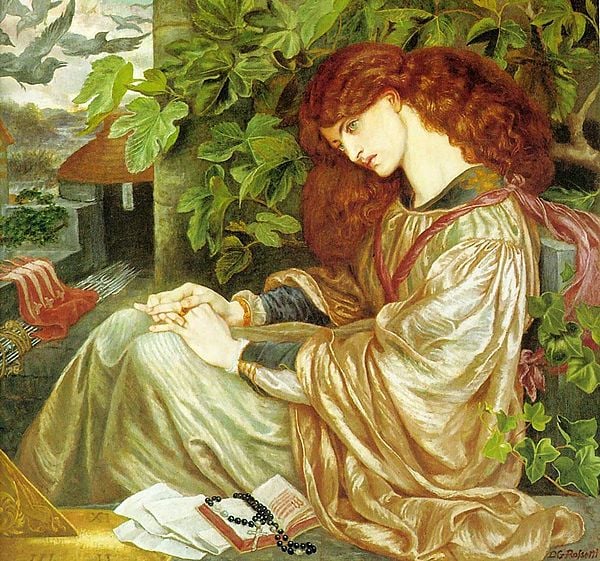
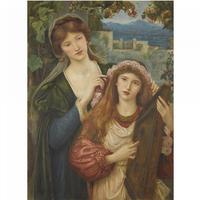
Based solely on the supplied facts—that the work is a Romantic literary painting by Dante Gabriel Rossetti titled Pia de' Tolomei—its significance lies in the intersection of two defining characteristics of the period.
First, as a Romantic work, it embodies the movement’s emphasis on intense emotion, individual tragedy, and a fascination with the medieval past. The subject, drawn from literature, allows Rossetti to explore personal suffering and pathos, key Romantic themes.
Second, as a literary painting, it demonstrates the Romantic era’s deep interconnection between visual art and narrative. The work does not merely illustrate a story but translates the textual, emotional arc of a character (likely from Dante’s Purgatorio) into a visual medium, making the narrative immediate and visceral. This hybrid genre was significant for elevating painting to the intellectual and emotional status of poetry, a central Romantic ambition. Thus, Pia de' Tolomei is significant as a concentrated example of Romanticism’s drive to fuse literary depth with painterly expression.