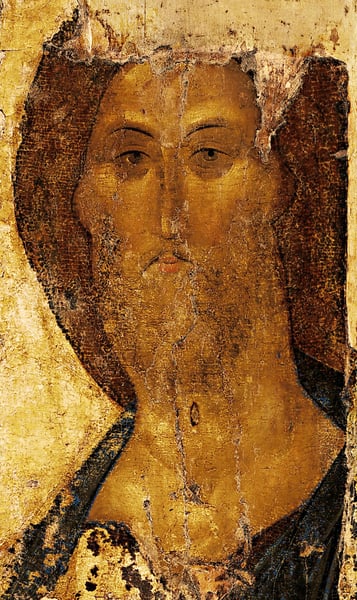
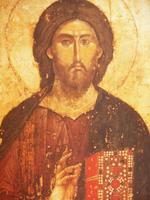
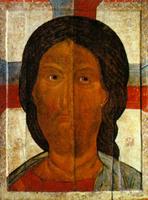
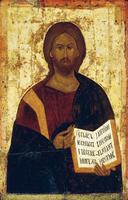
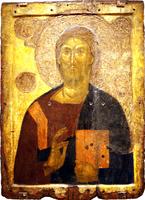
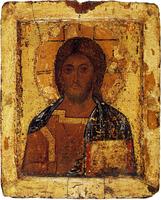
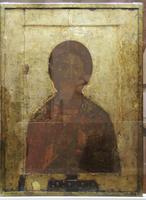
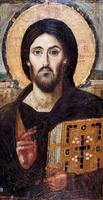
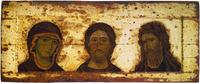
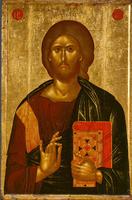
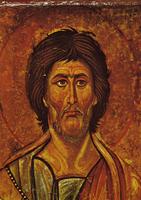
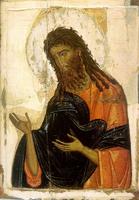
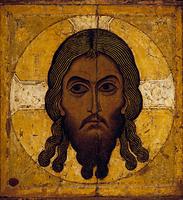
This icon, attributed to the masterful hand of Andrei Rublev, stands as a pinnacle of the Moscow school of icon painting, a vital offshoot of the Byzantine tradition. The work’s significance lies in how Rublev synthesizes the rigid, otherworldly formalism of Byzantine iconography with a new, deeply humanized spirituality that defines the Russian school. Here, "Christ as Saviour" is not simply a divine, distant ruler but a figure of compassionate intimacy, achieved through softer modeling of the face and a serene, inward gaze that invites the viewer into a personal relationship with the divine. The icon’s gold background, a hallmark of Byzantine art, asserts Christ’s eternal, heavenly nature, while the subtle chiaroscuro and gentle contours mark a departure from the flat, stark linearity of earlier icons. Rublev’s genius lies in balancing theological majesty with accessible warmth, making this image a bridge between the transcendent glory of Byzantium and the emotional depth of Russian Orthodox spirituality.