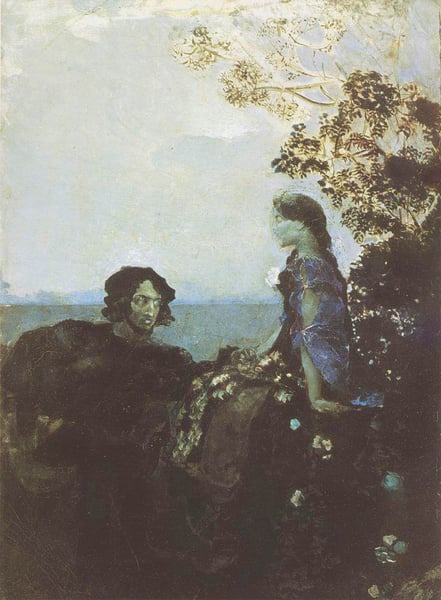
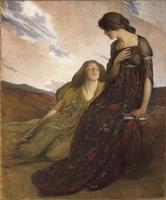
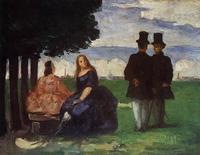
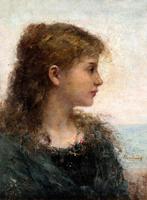
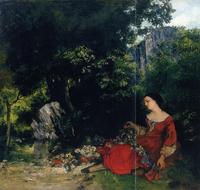
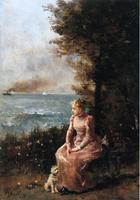
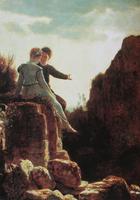
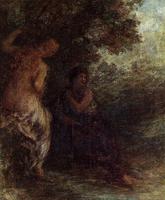
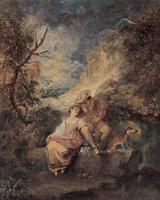
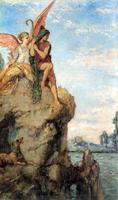
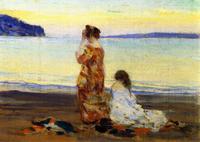
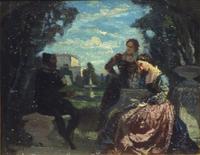
This artwork, Hamlet and Ophelia by Mikhail Vrubel, is a significant example of the Symbolist movement and its engagement with literary painting. Its importance lies in how it transforms a classic literary subject into a vehicle for subjective, psychological expression rather than straightforward narrative illustration.
As a Symbolist work, the painting prioritizes mood, inner emotion, and abstract ideas over realistic depiction. Vrubel’s treatment of Hamlet and Ophelia is not merely a scene from Shakespeare but a symbolic distillation of their tragic relationship—often focusing on isolation, madness, and existential despair. Within the Symbolist period, this approach was groundbreaking: it demonstrated that literary painting could serve as a window into the artist’s own psyche, using myth and literature as metaphors for universal human experiences.
Vrubel’s style, with its fractured forms, intense color, and spiritually charged atmosphere, marks a departure from both academic realism and impressionism, aligning Symbolism with the search for a deeper, transcendent reality. Hamlet and Ophelia thus stands as a key work that exemplifies how Symbolist artists elevated literary subjects into profound, often haunting, visual poetry, cementing Vrubel’s role as a crucial figure in late 19th‑century Russian and European art.