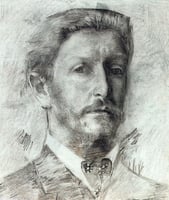
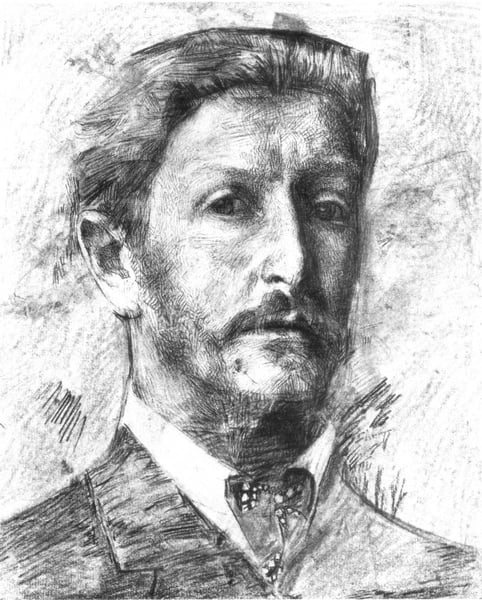
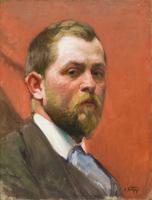
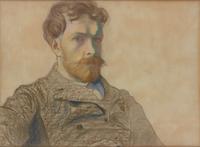
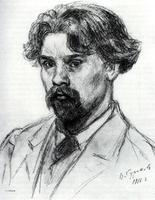
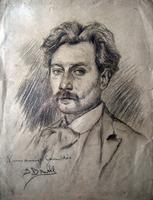
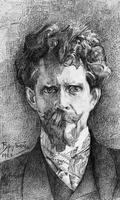
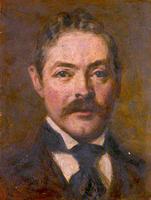
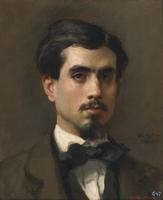
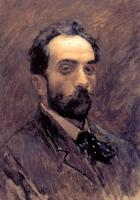
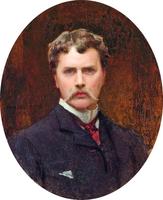
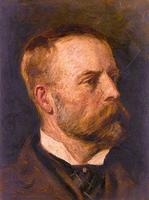
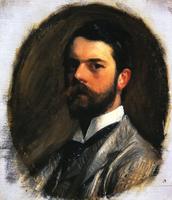
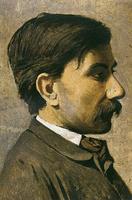
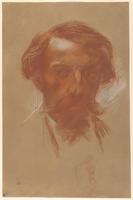
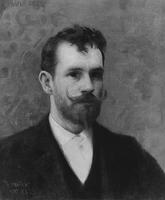
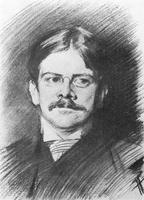
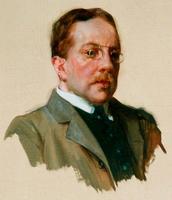
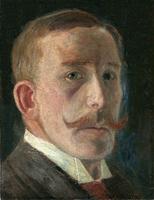
Mikhail Vrubel’s Self Portrait stands as a quintessential example of Russian Symbolism, a movement that prioritized inner psychological truth over outward realism. Within the self-portrait genre, Vrubel transforms the artist’s own likeness into a vessel for intense emotional and spiritual exploration.
The work’s significance lies in its departure from conventional portraiture: Vrubel does not seek to document his physical appearance but instead uses fractured brushwork and a somber, crystalline palette to evoke a sense of tortured introspection and fragmented identity. This approach is emblematic of Symbolism’s core goal—to express the ineffable, the mystical, and the turbulent inner life through suggestive form and color. The painting’s raw, almost anxious energy anticipates later Expressionist tendencies, marking Vrubel as a bridge between 19th-century Romanticism and the modernist preoccupation with subjective experience.