Analisi esperta di The Winter Canal di Mikhail Vrubel
Stile: Symbolism · Genere: cityscape
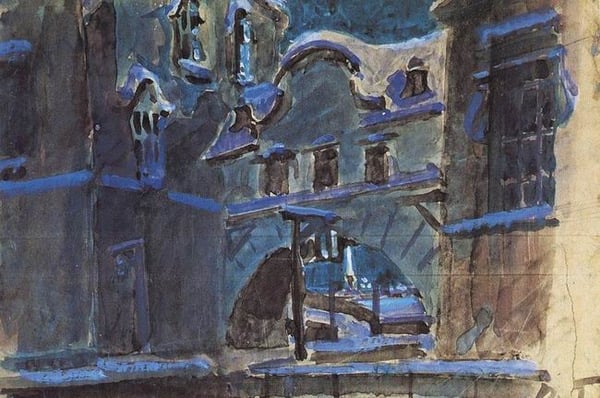
Mikhail Vrubel’s The Winter Canal stands as a compelling departure from the more overtly mythic or demonic subjects for which the Symbolist master is best known. Here, Vrubel applies his signature, mosaic-like brushwork and haunting, prismatic color to the genre of cityscape, transforming a familiar St. Petersburg waterway into a realm of psychological and meteorological tension.
What makes this work significant within Vrubel’s oeuvre and Symbolist art:
-
Symbolist Transfiguration of the Real: Unlike a conventional topographical view, Vrubel’s canal is not a documentary record but a mood-laden vision. The ice, the water, and the distant architecture are rendered with his characteristic faceted, almost stained-glass strokes, dissolving solid forms into a shimmering, unstable surface. This technique—where brushstrokes operate independently of descriptive outline—imbues the scene with a dreamlike, uncanny aura, turning the wintry city into a symbol of isolation and ephemeral beauty.
-
Psychological Atmosphere over Topography: St. Petersburg’s canals were a recurring motif for Symbolist writers (e.g., Andrei Bely, Alexander Blok) who saw the city as a spectral, artificial creation. Vrubel captures that essence: the canal is at once frozen and fluid, rooted in reality yet slipping into abstraction. The low, muted palette of blues, grays, and silvers—punctuated by unexpected touches of violet or green—suggests a cold that is not merely climatic but existential, a quiet monument to melancholy.
-
Technical Virtuosity as Meaning: Vrubel’s late style, marked by thick impasto and a sculptural handling of paint, is on full display. The “Winter Canal” demonstrates how Symbolist artists used painterly facture itself as a carrier of symbolism: the fragmented, jewel-like marks evoke both the brittle quality of ice and the shattered, subjective nature of perception. The cityscape becomes a vessel for inner experience.
In summary, The Winter Canal is significant because it shows Vrubel applying his symbolist language—centered on mystery, transformation, and emotional resonance—to a seemingly mundane vista, proving that for the Symbolist, even the most familiar urban corner can become a threshold to the ineffable.
Visivamente simili
20 opere con composizione e palette affini
Leningrad Evening
Vasile Dobrian
From Venice
Alfred Krupa
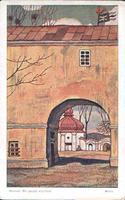
Vilna. In the courtyard of the catholic church.
Mstislav Dobuzhinsky
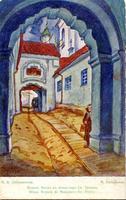
Vilno. Entrance to the Holy Trinity monastery.
Mstislav Dobuzhinsky
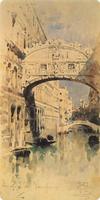
Venice. Bridge of Sighs
Mikhail Vrubel
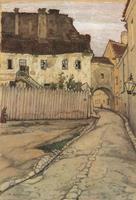
Vilno. Street.
Mstislav Dobuzhinsky
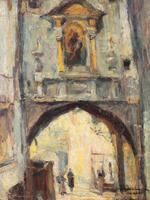
San Remo (Santa Brigita Arc)
Rudolf Schweitzer-Cumpana
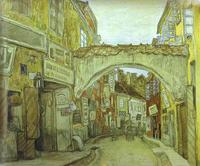
Glassmakers street in Vilno
Mstislav Dobuzhinsky
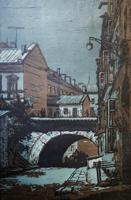
Odessa. The bridge on Lizoguba str.
Sergey Ryabchenko
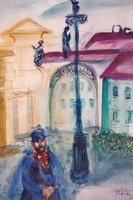
Mr. Muki in Prague
Maria Bozoky
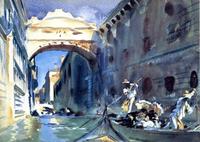
The Bridge of Sighs
John Singer Sargent
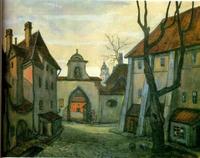
Old Vilno
Mstislav Dobuzhinsky
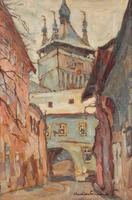
Sighișoara Tower
Rudolf Schweitzer-Cumpana
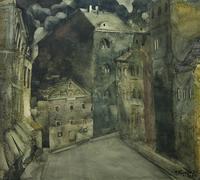
Torun
Petros Malayan
Narrow Street
Petros Malayan
Ryazan. House of Oleg.
Pyotr Konchalovsky
The blacksmith's courtyard
Mstislav Dobuzhinsky
Night on the Giudecca in Venice
Vincenzo Cabianca
Venice
Mikhail Vrubel
Chatham Square
Franz Kline