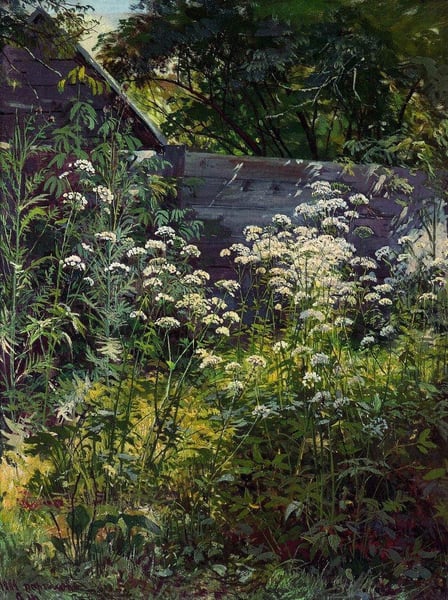
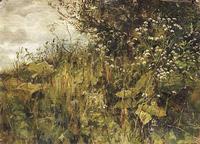
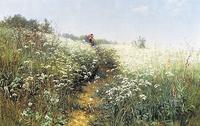
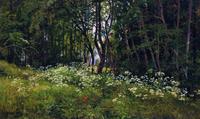
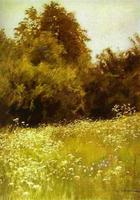
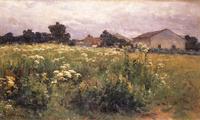
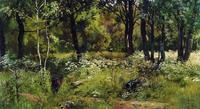
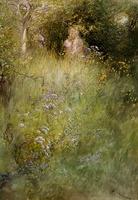
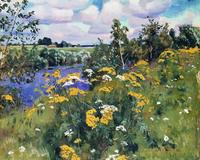
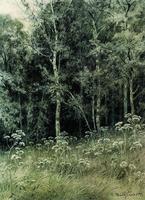
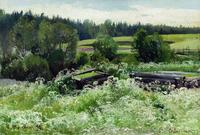
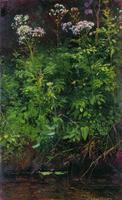
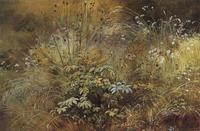
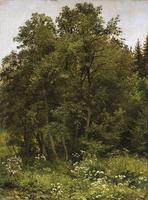
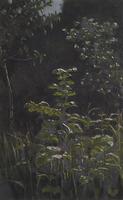
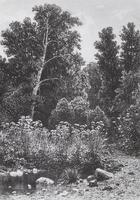
Ivan Shishkin’s Corner of Overgrown Garden. Goutweed-Grass (1884) exemplifies the pinnacle of Russian Realist landscape painting, a style championed by the Peredvizhniki (Wanderers). Shishkin, celebrated as the “tsar of the forest,” here turns his rigorous eye to a humble, unmanaged patch of nature—a subject that would have been dismissed as trivial in academic art.
The painting’s significance lies in its radical fidelity to the overlooked. Shishkin elevates common goutweed and tangled grass into a monumental study of botanical structure and light. Every leaf and stem is rendered with scientific precision, yet the composition remains lush and painterly, capturing the humid atmosphere of a thicket. This work embodies Realism’s core belief that truth and beauty reside in the ordinary, not the idealized. By focusing on a “corner” of a garden, Shishkin asserts that the wild, unkempt edges of the natural world are as worthy of contemplation as grand, cultivated landscapes. It is a quiet manifesto: nature, in its most modest state, offers endless depth and grandeur when observed with patience and skill.