Expert Analysis: "Forest Cemetery" by Ivan Shishkin
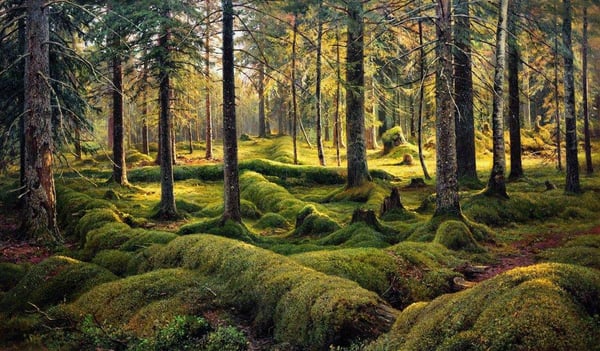
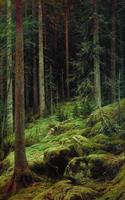
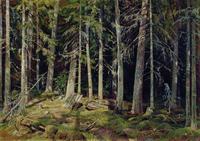
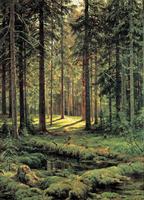
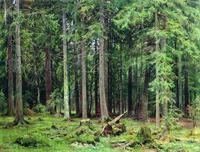
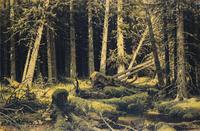
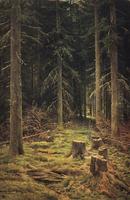
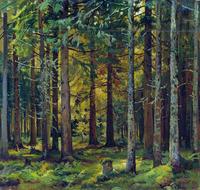
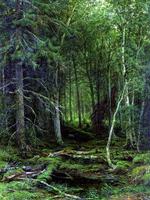
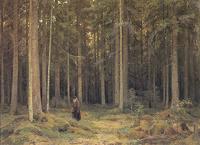
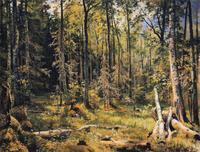
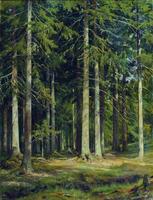
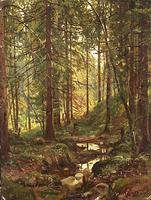
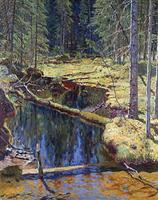
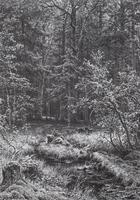
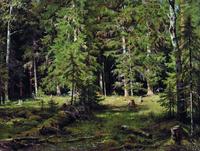
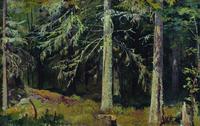
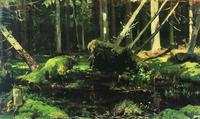
Ivan Shishkin’s "Forest Cemetery" stands as a quintessential example of Russian Realism, embodying the movement’s commitment to depicting nature with scientific precision and poetic resonance. As a landscape painter, Shishkin was renowned for his almost botanical accuracy—every pine needle, mossy stone, and patch of undergrowth is rendered with meticulous detail, yet the composition transcends mere documentation to evoke a profound sense of place.
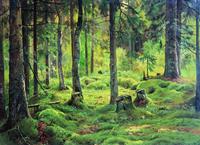
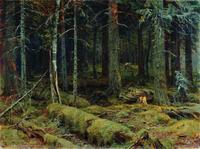
What makes this work significant is its masterful handling of light and atmosphere within a somber subject. The “forest cemetery” is not a place of human graves but rather a dense, ancient woodland where fallen trees and decaying stumps create a natural burial ground. Shishkin uses a muted, earthy palette punctuated by shafts of sunlight filtering through the canopy, casting dappled light on the forest floor. This interplay of light and shadow—a hallmark of Realist painting—imbues the scene with a quiet, meditative stillness, inviting contemplation of life, death, and regeneration.
The painting also exemplifies Shishkin’s role within the Peredvizhniki (The Wanderers), a group of Russian artists who rejected academic conventions in favor of truthful, often nationalistic depictions of their homeland. "Forest Cemetery" is not a romanticized wilderness but a raw, unidealized view of nature’s cycle—decadent yet beautiful. Shishkin’s ability to capture the textures of bark, the softness of moss, and the angularity of broken branches demonstrates his deep study of the forest, earning him the title “the tsar of the woods.”
Ultimately, the work’s significance lies in its synthesis of realism and emotional depth: it is a landscape that feels both hyper-specific (a recognizably Russian forest) and universally resonant, a meditation on memory and the enduring power of the natural world.