Christ After the Flagellation Contemplated by the Christian Soul
Dettagli
Analisi esperta di Christ After the Flagellation Contemplated by the Christian Soul di Diego Velazquez
Stile: Baroque · Genere: religious painting
Expert Analysis: Christ After the Flagellation Contemplated by the Christian Soul by Diego Velázquez
Style & Period Context
As a work of the Baroque period, this religious painting embodies the movement’s core aims: to evoke intense emotional engagement, to dramatize sacred narrative, and to draw the viewer into a direct, personal encounter with the divine. Velázquez, Spain’s preeminent Baroque master, here applies his signature naturalism—a hallmark that sets this piece apart from the more idealized treatments of the same subject common among his Italian contemporaries.
Significance Within Its Genre
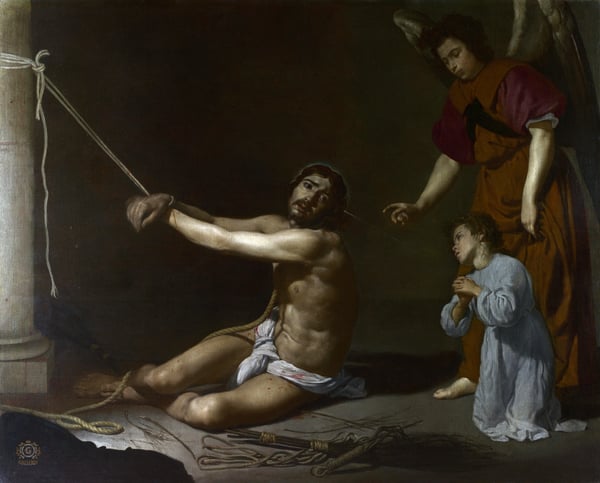
The painting’s title explicitly frames the scene as a meditation: Christ after the flagellation is not depicted in the midst of torment, but in its aftermath, allowing the Christian soul (presumably a figure within the composition or, by extension, the viewer) to contemplate his suffering. This introspective approach is a defining feature of Spanish Baroque religious painting, which prioritized personal piety and spiritual reflection over overt theatricality. Velázquez deepens this by focusing on the psychological weight of silence and aftermath rather than the violent action itself.
Artistic Choices That Define Its Importance
- Chiaroscuro and Tenebrism: Velázquez uses stark contrasts of light and shadow—a technique borrowed from Caravaggio but refined into a softer, more atmospheric tool. The light falls selectively on Christ’s bruised body and the figure of the Soul, isolating them in a pool of divine illumination while the background recedes into darkness. This both emphasizes the physical reality of the wounds and heightens the solemn, private mood.
- Naturalism and Humanity: Unlike many Baroque depictions that show a triumphant or idealized Christ, Velázquez presents a profoundly human figure—visible signs of exhaustion, blood, and contusion are rendered with unflinching realism. This choice aligns with the Counter-Reformation’s call for accessible, emotionally resonant religious art: the viewer is invited to see Christ not as a remote icon, but as a suffering man whose pain invites empathetic contemplation.
- Narrative Focus on the Soul: The presence of the Christian Soul—often represented as a small, humble figure—shifts the weight of the story from the historical event to its personal, devotional reception. This is the painting’s most significant innovation: it is less a record of flagellation than an allegory of how the faithful are to respond to that sacrifice. The Soul’s gaze becomes the viewer’s own, making the painting a tool for meditation rather than mere illustration.
Why It Stands Out
In the broader Baroque canon, Velázquez’s Christ After the Flagellation Contemplated by the Christian Soul is a quiet masterpiece that prioritizes interiority over spectacle. It demonstrates the artist’s rare ability to fuse supreme technical realism with a profound theological subtlety—turning a moment of physical abjection into an invitation for silent, personal devotion. This work exemplifies how Baroque religious painting could move beyond dramatic action to explore the stillness of faith, making it a significant contribution both to Velázquez’s oeuvre and to the spiritual art of the 17th century.
Museum / Gallery
Visivamente simili
20 opere con composizione e palette affini
Crowning with Thorns
Caravaggio
Christ at the Column
Gerard van Honthorst
Flagellation of Christ
Caravaggio
Christ at the Column
Caravaggio
St. Sebastian Tended by the Holy Women
Jusepe de Ribera
Roman Charity, Cimon and Peres
Dirck van Baburen
The Lamentation
Jusepe de Ribera
Crucifixion of Saint Peter
Caravaggio
Martyrdom of St. Bartholomew
Jusepe de Ribera
St. Bartholomew almost in agony
Francisco de Zurbaran
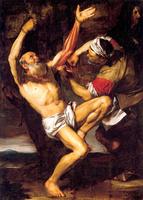
The Martyrdom of St. Bartholomew
Jusepe de Ribera
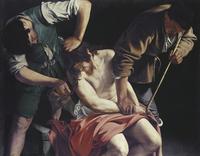
Christ crowned with Thorns
Orazio Gentileschi
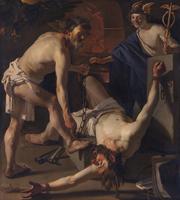
Prometheus Chained by Vulcan
Dirck van Baburen
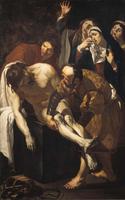
Descent from the Cross Or Lamentation.
Dirck van Baburen
Descent from the cross
Mabuse
Ecce Homo
Ludovico Carracci
The Dead Christ Mourned by Two Angels
Guercino
Saint Sebastian Attended by Saint Irene
Jusepe de Ribera
Cristo Deposto E La Maddalena
Giulio Cesare Procaccini
Christ Crowned with Thorns
Gerard van Honthorst