Expert analysis of Diego Velazquez’s Juan de Pareja
Style: Baroque · Genre: portrait
Expert Analysis: Juan de Pareja (1650) by Diego Velázquez
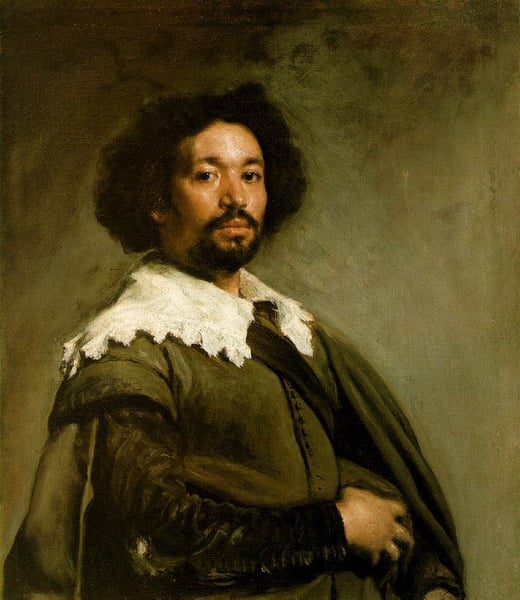
Velázquez’s Juan de Pareja stands as a revolutionary achievement in Baroque portraiture, celebrated for its unprecedented realism, psychological depth, and technical virtuosity. Painted during the artist’s second visit to Rome, the work depicts his enslaved assistant and studio collaborator—a man of Moorish descent who would later be granted his freedom by Velázquez and become a notable painter in his own right.
Significance within Baroque Style and Portraiture
-
Radical Naturalism: Unlike the idealized court portraits of the era, Velázquez presents Pareja with unflinching honesty. The sitter’s dark skin, sharp cheekbones, and direct gaze are rendered with subtle tonal transitions and a masterful handling of light that seems to emerge from within the canvas. This truth-to-life approach—a hallmark of Velázquez’s mature style—elevates a servant to the same dignified treatment typically reserved for royalty.
-
Psychological Complexity: Pareja’s expression is neither subservient nor defiant but quietly self-possessed. His tilted head and slightly parted lips suggest a moment of arrested speech, inviting the viewer into a silent dialogue. This narrative ambiguity—caught between presence and absence, deference and pride—marks a profound shift from static courtly formulas to a living, thinking subject.
-
Technical Innovation: Velázquez’s loose, almost impressionistic brushwork—visible in the broad strokes of the white collar and the soft modeling of the face—anticipates modern painting. From a distance, these marks coalesce into a convincing likeness; up close, they reveal the artist’s delight in paint’s materiality. The restrained palette of blacks, whites, and earth tones is enlivened by a single accent of crimson, focusing our attention on the sitter’s dignified stance.
Historical Impact
When exhibited at the Pantheon in Rome in 1650, the portrait caused a sensation. Legend holds that it was mistaken for a living person, so convincing was its illusionism. More importantly, it publicly asserted the intellectual and artistic worth of a person of color in a society shaped by racial hierarchies. Velázquez’s choice to immortalize Pareja as an equal—and not merely as a property or accessory—challenges the conventions of patronage and status that defined Baroque portraiture.
In essence, Juan de Pareja is not only a masterpiece of observation and paint handling but also a quiet manifesto: a testament to the artist’s belief that every human face, regardless of station, contains the full depth of the Baroque spirit—theatrical, fleeting, and profoundly alive.
Museum / Gallery
Visually similar
20 works with related composition and palette
Portrait of Sir Thomas Chaloner
Anthony van Dyck
Portrait of Kaspar Scioppius
Peter Paul Rubens
Portrait Of Quintijn Symons
Anthony van Dyck
Portrait of Vincenzo Mosti
Titian
Portrait Of A Man
Frans Hals
Portrait of a Man
Frans Hals
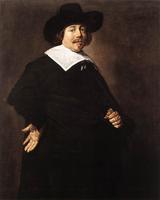
Portrait of a Man
Frans Hals
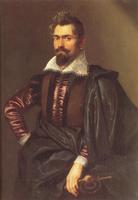
Portrait of Gaspard Schoppins
Peter Paul Rubens
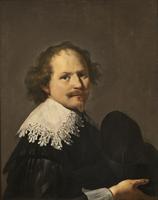
Portrait of a Man
Johannes Moreelse
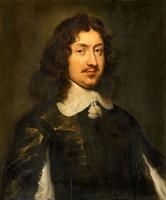
Portrait of a gentleman
Erasmus Quellinus the Younger
Portrait of a Man
Gerard Terborch
Portrait of an Unknown Gentleman, Aged 35, with the Motto 'Humilior melior' (possibly a member of the Meller Family)
Marcus Gheeraerts the Younger
Portrait of a Man
Frans Hals
Democritus
Diego Velazquez
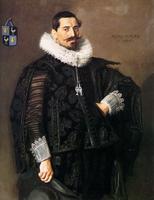
Portrait of Jacob Pietersz Olycan
Frans Hals
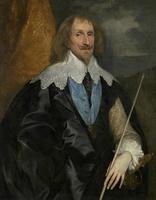
Philip Herbert 4th Earl of Pembroke
Anthony van Dyck
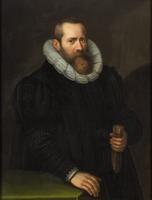
Portrait of a man
Karel Van Mander
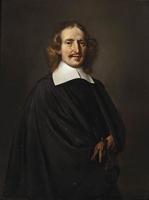
Portrait of a gentleman, three-quarter-length, in a black costume with a white collar, holding a glove
Thomas de Keyser
Sir Thomas Aylesbury
William Dobson
Portrait of an unknown man
Frans Hals