Expert analysis of Diego Velazquez’s Portrait of the Infanta Margarita
Style: Baroque · Genre: portrait
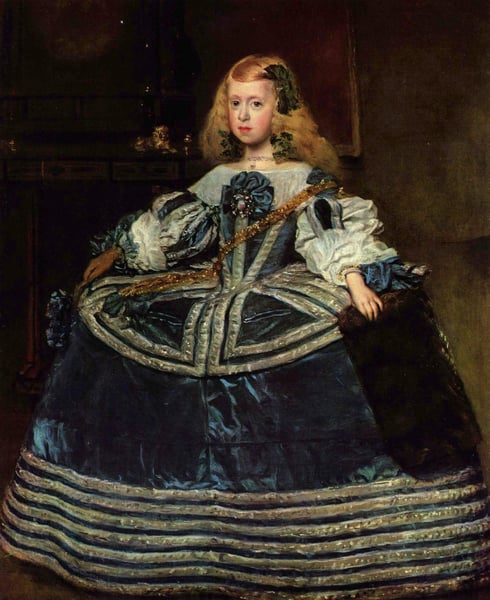
As an expert art historian, I will analyze "Portrait of the Infanta Margarita" by Diego Velázquez based solely on the structured facts provided: it is a Baroque portrait. Within this framework, the work’s significance lies in how it epitomizes the pinnacle of Spanish Baroque portraiture.
Significance within the Baroque Style:
-
Mastery of Psychological Presence: Baroque portraiture, especially in the Spanish court, demanded both formality and a sense of living presence. Velázquez achieves this by capturing the Infanta’s youthful dignity with extraordinary naturalism. The slight tilt of her head, the directness of her gaze, and the subtle softness of her features transcend mere documentation, offering a glimpse of her personality within the rigid etiquette of the Habsburg court.
-
Innovative Use of Light and Texture: The Baroque period prized dramatic contrasts (chiaroscuro) and textural realism. In this portrait, Velázquez employs a soft, diffused light that models the Infanta’s face and hands with delicate gradations, while her elaborate gown—with its intricate silver embroidery, wide panniers, and stiff lace—becomes a tour de force of painterly illusion. The brushwork is both precise and loose; from a distance, the fabric shimmers with life, while up close, it dissolves into expressive strokes—a hallmark of Velázquez’s mature Baroque technique.
-
Synthesis of Formality and Intimacy: As a court portrait, the work fulfills its ceremonial role (the Infanta is depicted with the symbols of her royal status, such as the oversized bow and the decorative apron). Yet Velázquez breaks from stiff convention by placing the child in a relatively relaxed posture, creating a subtle tension between her official role and her real, fleeting youth. This balance between the ideal and the observed is a defining achievement of Baroque portraiture.
-
Influence on Later Artists: Velázquez’s ability to merge surface decoration with psychological depth made this portrait—and others like it—a touchstone for later painters. The soft handling of light and the focus on the sitter’s inner life prefigure the more introspective portraits of the 18th and 19th centuries, all while remaining firmly rooted in the Baroque love for theatricality and material splendor.
In sum, "Portrait of the Infanta Margarita" is a quintessential Baroque portrait because it harmonizes the period’s core concerns: the illusion of life, the celebration of royal power, and the artist’s personal vision. Velázquez transforms a formal commission into a study of character, demonstrating why he is considered the supreme portraitist of the Spanish Golden Age.
Museum / Gallery
Visually similar
20 works with related composition and palette
Portrait of Queen Mariana of Austria
Diego Velazquez
Queen Mariana
Diego Velazquez
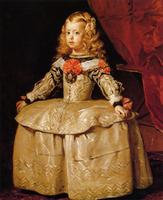
Portrait of the Infanta Margarita Aged Five
Diego Velazquez
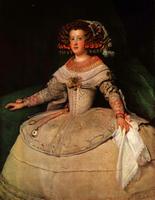
Portrait of the Infanta Maria Teresa future Queen Marie Therese of France
Diego Velazquez
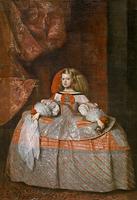
The Infanta Maria Marguerita in Pink
Diego Velazquez
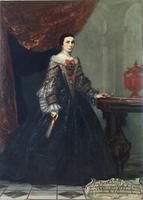
Portrait of Teresa Francisca Mudarra Y Herrera
Claudio Coello
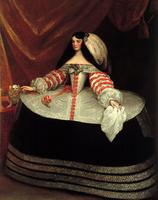
Portrait of Ines de Zuñiga y Velasco
Juan Carreno de Miranda
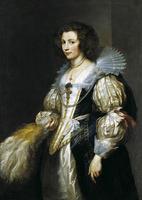
Portrait of Maria de Tassis
Anthony van Dyck

Mrs. William Astor
Carolus-Duran
Mary
Franz Stuck
Portrait of Maria Lugia de Tassis
Anthony van Dyck
Portrait of a Lady. Lucia Wijbrants
Gabriel Metsu
Anne Parsons, Daughter of Alderman Humphrey Parsons, Brewer and Lord Mayor of London
Thomas Hudson
Helena Fourment
Peter Paul Rubens
Mrs. Francis Beckford
Joshua Reynolds
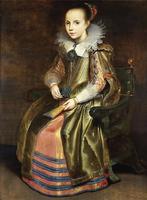
Cornelia Or Elisabeths Vekemans Daughter of Joris Vekemans and Maria Van Ghinderdeuren
Cornelis de Vos
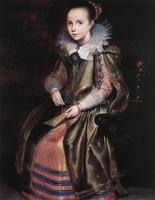
Elisabeth (or Cornelia) Vekemans as a Young Girl
Cornelis de Vos
La chambre des vision
Branko Bačanović
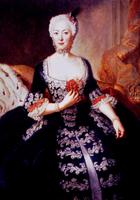
Isabel Cristina de Brunswick-Wolfenbüttel
Antoine Pesne
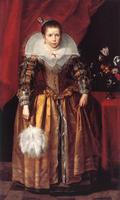
Portrait of a Girl at the Age of 10
Cornelis de Vos