Analisi esperta di The Infanta Maria of Austria di Diego Velazquez
Stile: Baroque · Genere: portrait
Expert Analysis: "The Infanta Maria of Austria" by Diego Velázquez
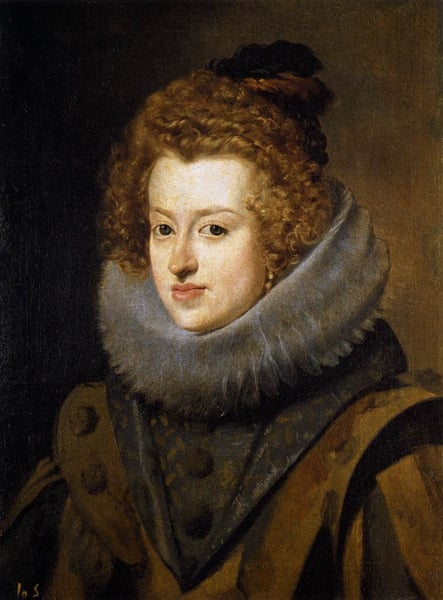
This portrait exemplifies the pinnacle of Baroque portraiture through its masterful fusion of psychological depth, regal formality, and painterly virtuosity. Velázquez, working as court painter to Philip IV, transforms a standard dynastic image into a deeply human and formally sophisticated work.
Significance within the Baroque Style:
- Naturalism and Presence: The Infanta is rendered with a remarkable sense of tangible reality. Velázquez’s characteristic alla prima brushwork – loose yet precise – models the texture of skin, the weight of silk, and the shimmer of pearls. This direct handling echoes the Baroque fascination with the trompe-l’œil effect, making the sitter feel present.
- Psychological Penetration: Unlike many earlier court portraits that emphasized iconography and status, Velázquez captures a quiet, introspective gaze. The Infanta appears both dignified and vulnerable, a trait that defines his revolutionary approach to royal portraiture. The slight asymmetry in her expression suggests a moment of private thought, breaking from stiff formalism.
- Light and Atmosphere: The subtle play of light – diffused across the face and fabric – creates a soft, volumetric form. The deep, neutral background isolates the figure, focusing all attention on her countenance and costume. This use of chiaroscuro is restrained but effective, typical of Velázquez’s mature style.
Significance within the Portrait Genre:
- Ambassadorial Function: As a portrait of a Hapsburg princess destined for political marriage (she later became Holy Roman Empress), this work served as a diplomatic tool. Velázquez balances the required grandeur (rich black and silver dress, pearl-studded hair) with an understated elegance that avoids over-theatricality.
- Innovation in Composition: The three-quarter-length pose, with the Infanta turned slightly and resting one hand on a chair (often a gilded sillón de caderas), was standard for royalty. Yet Velázquez’s handling of the space – the minimal props, the uncluttered background – gives an air of intimate monumentality. The exquisite rendering of the lace, sleeve slashes, and brocade demonstrates his ability to convey texture without aesthetic overload.
Conclusion: “The Infanta Maria of Austria” is significant because it encapsulates Velázquez’s ability to elevate a formal court portrait into a study of humanity, all while adhering to the Baroque ideals of immediacy, realism, and emotional resonance. It stands as a testament to how the genre could serve both power and art.
Museum / Gallery
Visivamente simili
20 opere con composizione e palette affini
Marchesa Elena Grimaldi-cattaneo
Anthony van Dyck
Portrait of a Woman
Anthony van Dyck
Portrait of a Chambermaid of Infanta Isabella
Peter Paul Rubens
Portrait Of A Lady, Half-length, Said To Be A Genoese
Anthony van Dyck
Portrait of a Ladand
Cornelis de Vos
Portrait of a Noblewoman
Anthony van Dyck
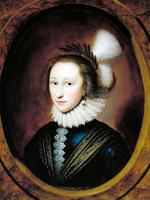
Portrait of a woman
Cornelius Johnson
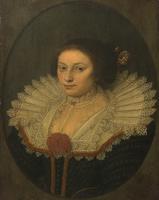
Portrait of Aertje Witsen
David Bailly
MINIATURBILDNIS EINER JUNGEN DAME MIT HALSKRAUSE UND SEIDENHAUBE
Gortzius Geldorp
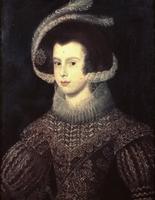
Isabella of Bourbon
Diego Velazquez
Portrait of a lady, half-length, dressed in black
Cornelis de Vos
Mary Curzon (1585–1645), Countess of Dorset
William Hamilton
Petronella Buys, Wife of Philips Lucasz
Rembrandt
Portrait of Elizabeth Ivanovna Naryshkina
Vasily Tropinin
Portrait of a lady
Cornelis de Vos
Infantin Isabella Clara Eugenia
Sofonisba Anguissola
Portrait of a Lady
Anthony van Dyck
Portrait of a Young Woman
Eva Gonzales
Johanna Visscher
David Bailly
Portrait of Minerva Anguissola
Sofonisba Anguissola