Expert analysis of Diego Velazquez’s Three Musicians
Style: Baroque · Genre: genre painting
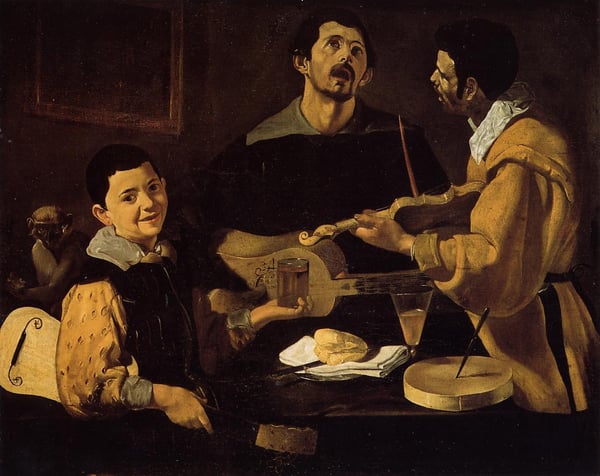
Based solely on the provided facts, "Three Musicians" by Diego Velázquez is significant as a Baroque genre painting that exemplifies the movement’s shift toward depicting everyday life with heightened drama and naturalism. Within the Baroque period, artists often focused on religious or royal subjects, but Velázquez’s choice of genre painting—a scene of common musicians—elevates the ordinary to a moment of artistic importance. The work likely employs the Baroque hallmarks of strong contrasts of light and shadow (chiaroscuro) and intense, focused expressions to transform a casual musical gathering into a study of human character and emotion. By capturing the musicians in mid-performance with a direct, almost theatrical immediacy, Velázquez demonstrates the Baroque fascination with fleeting moments and sensory engagement, while also asserting that humble, everyday activities hold as much visual and emotional power as grand historical or mythological scenes. This makes "Three Musicians" a key example of how Baroque genre painting expanded the boundaries of artistic subject matter, valuing observation of real life over idealized forms.
Museum / Gallery
Genre
Style
Visually similar
20 works with related composition and palette
Breakfast
Diego Velazquez
The Waterseller of Seville
Diego Velazquez
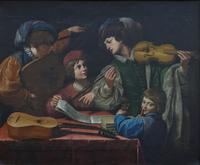
Concert
Leonello Spada
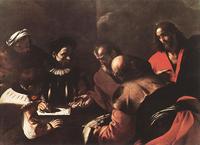
Tribute Money
Mattia Preti
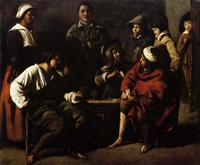
Small card players
Le Nain brothers
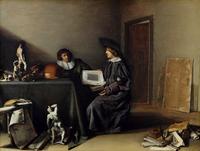
A Conversation Between An Artist and a Connoisseur
Pieter Codde
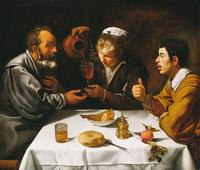
The Lunch
Diego Velazquez
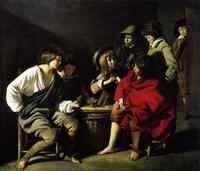
Small card players
Le Nain brothers
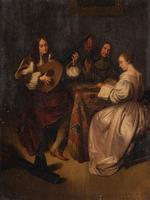
MUSIKALISCHE UNTERHALTUNG
Caspar Netscher
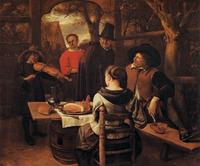
Meal
Jan Steen
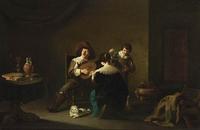
Interior with a Gentleman Playing a Lute and a Lady Singing
David Teniers the Younger
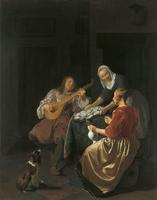
Eating Oysters
Jacob Ochtervelt
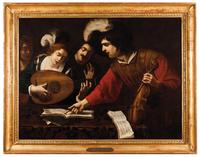
The music lesson
Leonello Spada
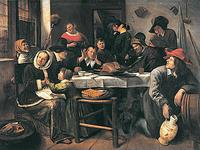
Liveliest
Jan Steen
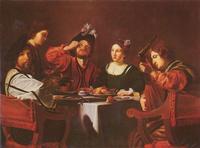
Company at the table
Nicolas Tournier
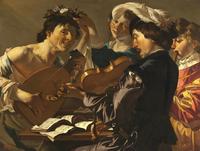
Concert
Dirck van Baburen
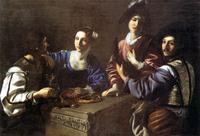
Drinking Party with a Lute Player
Nicolas Tournier
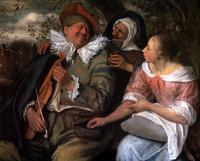
Robbed violin player
Jan Steen
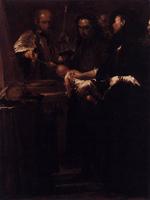
The Seven Sacraments - Baptism
Giuseppe Maria Crespi
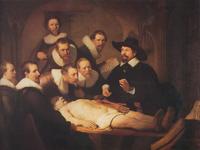
The Anatomy Lesson of Dr. Nicolaes Tulp
Rembrandt