Expertenanalyse zu Diego Velazquezs Young Peasant Girl
Stil: Baroque · Genre: portrait
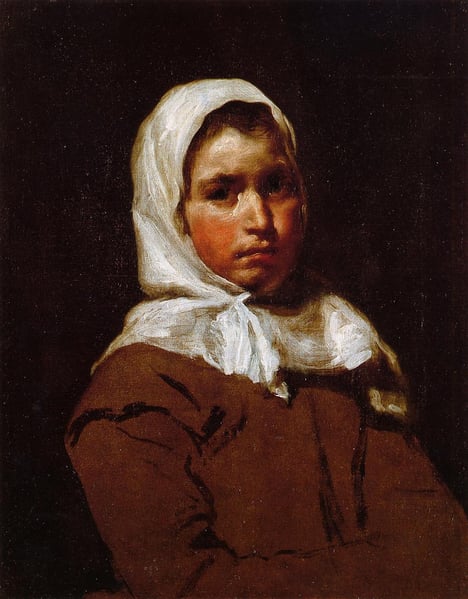
Diego Velázquez’s Young Peasant Girl stands as a compelling example of the Baroque portrait’s capacity to elevate humble subjects through naturalism and psychological depth. Executed during the apex of the Spanish Golden Age, the work reflects Velázquez’s signature ability to infuse a simple genre scene with the dignity and gravity typically reserved for royalty or religious figures.
Significance within the Baroque style and the portrait genre:
-
Radical Naturalism: Unlike idealized court portraits, Velázquez renders the peasant girl with unflinching honesty—her coarse features, flushed cheeks, and worn clothing are depicted without sentimentality. This directness aligns with the Baroque interest in capturing the truth of human experience, influenced by Caravaggio’s tenebrism and the Spanish bodegón tradition.
-
Mastery of Light and Texture: Velázquez employs a restrained palette and subtle chiaroscuro, modeling the girl’s face and hands with soft, diffused light that seems to emanate from within the composition. The rough fabric of her shawl and the earthy tones of her skin are painted with loose, fluid brushstrokes that anticipate the impasto freedom of later masters like Manet.
-
Emotional Accessibility: The girl’s direct, slightly wary gaze engages the viewer, breaking the fourth wall and creating an intimate, almost confrontational encounter. This psychological immediacy was revolutionary for a portrait of a lower-class subject, underscoring the Baroque’s democratization of emotion and its focus on the individual.
-
Contrast with Courtly Portraiture: Velázquez, as court painter to Philip IV, was known for elevating commoners to the same level of artistic scrutiny as nobles. In Young Peasant Girl, the lack of ornate attire or symbolic props forces the viewer to confront the subject’s humanity on its own terms—a quiet yet powerful statement on the Baroque fusion of art and social observation.
While less famous than Las Meninas or The Water Seller of Seville, this painting encapsulates Velázquez’s core achievement: transforming the portrait into a mirror of real life, where even the humblest sitter is granted an eternal, dignified presence.
Museum / Gallery
Visuell ähnlich
20 Werke mit ähnlicher Komposition und Farbpalette
Portrait of argentinian girl
Armando Montaner Valdueza
White Headscarf Girl Head
Ion Andreescu
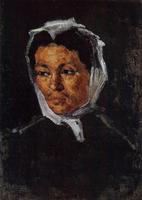
The Artist's Mother
Paul Cezanne
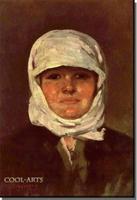
Catinca
Nicolae Grigorescu
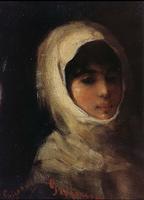
Giri with White Veil
Nicolae Grigorescu
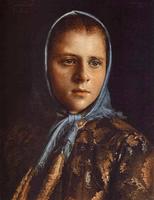
Russian Girl in a Blue Shawl
Ivan Kramskoy
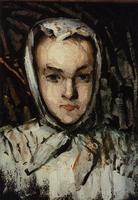
Portrait of Marie Cezanne, the Artist's Sister
Paul Cezanne
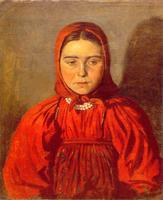
The girl in red
Nikolai Kuznetsov
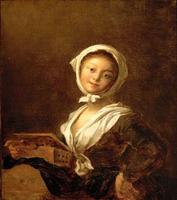
Girl with a Marmot
Jean-Honore Fragonard
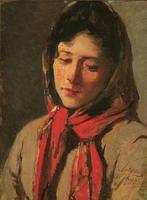
Portrait of a peasant woman
Silvestro Lega
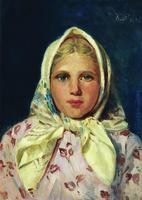
Girl in a Kerchief (Portrait of the Girl)
Konstantin Makovsky
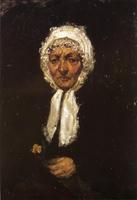
Old Mother Gerard
James McNeill Whistler
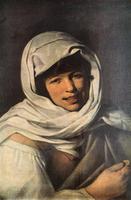
The Girl with a Coin (Girl of Galicia)
Bartolome Esteban Murillo
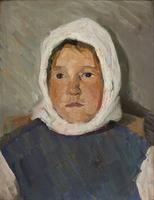
A Pequena Aldeã
Lasar Segall
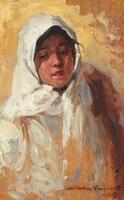
Peasant Woman with White Headscarf
Nicolae Vermont
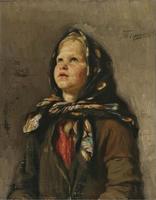
A girl with scarf
Ivan Tvorozhnikov
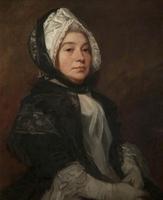
Esther Taubman, née Christian
George Romney
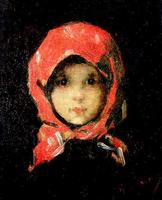
The Little Girl with Red Headscarf
Nicolae Grigorescu
Portrait of V. N. Voeikova, the grandmother of the artist
Vasily Polenov
Portrait of a Girl
Corneliu Baba