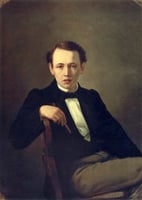
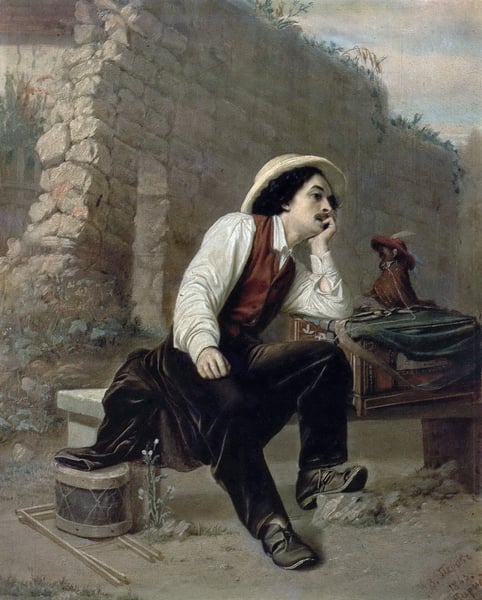
Analisi esperta di Organ Grinder di Vasily Perov
Stile: Realism · Genere: genre painting
Expert Analysis: "Organ Grinder" by Vasily Perov
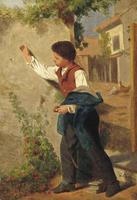
Vasily Perov’s "Organ Grinder" stands as a poignant exemplar of 19th-century Russian Realism, a movement dedicated to depicting the unvarnished truths of everyday life. As a genre painting, it captures a street musician — an organ grinder — who was a common yet marginalized figure in urban Russia. Perov’s significance lies in his ability to transform this humble subject into a powerful social document.
What makes this work significant within Realism and genre painting:
-
Social Conscience Without Sentimentality – Perov, a leading member of the Peredvizhniki (The Wanderers), used realism to critique social injustice. The organ grinder is not romanticized; instead, Perov emphasizes the fatigue and weathered expression of the man, his worn clothing, and the mechanical, repetitive nature of his labor. This direct, unidealized portrayal reflects Realism’s core tenet: art as a mirror of society’s hardships.
-
Narrative Depth in a Single Figure – Unlike many genre paintings that rely on bustling scenes, Perov isolates the organ grinder, focusing attention on his solitary existence. The grinding of the barrel organ becomes a metaphor for the grinding poverty of the urban poor. The viewer is invited to contemplate not just the man, but the economic forces that have left him to rely on the charity of passersby.
-
Technical Mastery of Light and Texture – Perov’s brushwork captures the gritty texture of the street—the grime on the instrument, the threadbare fabric of the coat, the dull light of a cloudy day. This attention to material detail grounds the scene in a specific, recognizable reality, a hallmark of Realist technique that elevates genre painting from mere anecdote to profound observation.
-
Contextual Significance – Created during a period of intense social reform in Russia (following the 1861 emancipation of the serfs), Perov’s work gives voice to those left behind by modernization. The organ grinder represents a pre-industrial, itinerant trade disappearing in the face of urbanization. In this sense, the painting is both a historical record and a compassionate critique.
In summary, "Organ Grinder" is significant because it harnesses Realist style not for decorative appeal, but for moral and social inquiry. Perov’s ability to find dignity—and tragedy—in a humble street musician confirms his place as a master of genre painting and a conscience of his era.
Museum / Gallery
Visivamente simili
20 opere con composizione e palette affini
Parisian rag-picker
Vasily Perov
Alter Musiker und Knabe
Antonio Zoppi
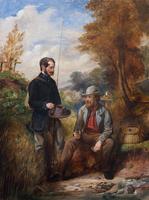
The Artist Fishing with His Brother, R. M. Ballantyne
John Ballantyne
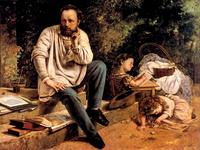
Pierre Joseph Proudhon and his children in 1853
Gustave Courbet
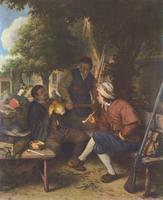
Resting Travellers
Adriaen van Ostade
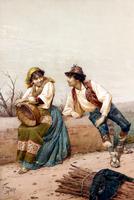
Courtship on the roadside
Filippo Indoni
Italian peasant on the barrel
Fyodor Bronnikov
Learning to Beg
Hendrick Joseph Dillens
Children Playing with Puppies
William Collins
Man lighting pipe
Filippo Indoni
Der Zitherspieler
Franz Defregger
The attachment
Peter Fendi
The Convict
Marcus Stone
Italian Peasants Playing Morra and a Peasant Woman with Wine Bottle
Anton Romako
Portrait of the sculptor Jerónimo Suñol
Marià Fortuny
The natural history lesson
Adolf Eberle
Card-playing shoemaker boys
Ludwig Knaus

Lunch time
Felix Schlesinger
Canvassing for a Vote
George Caleb Bingham
An irritating visitor
Pierre Jean Edmond Castan