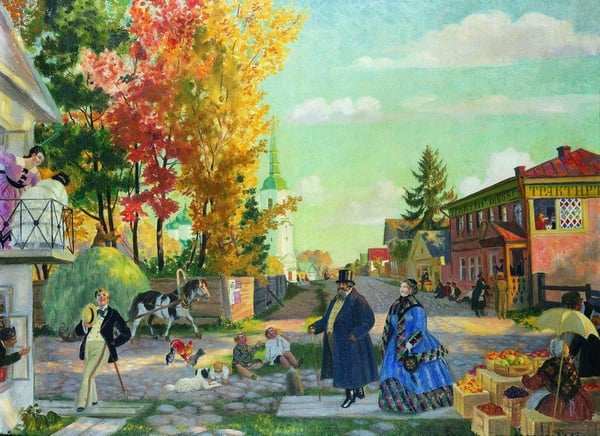
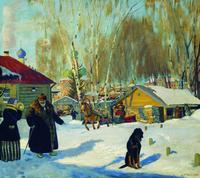
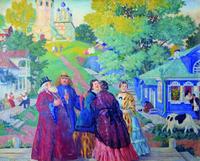
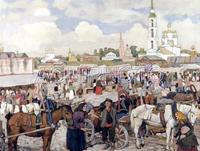
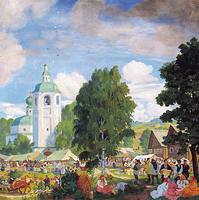
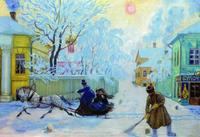
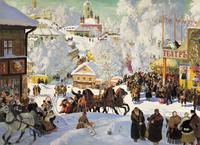
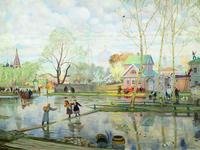
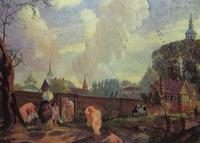
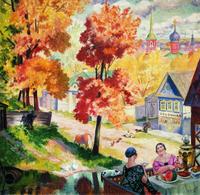
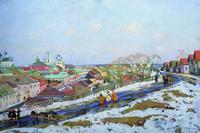
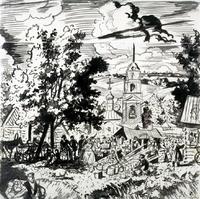
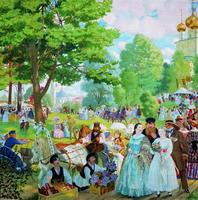
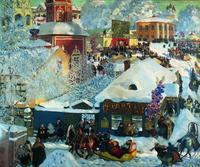
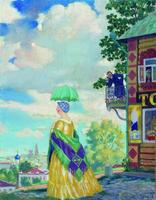
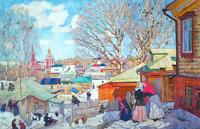
Boris Kustodiev’s Autumn festivities stands as a vibrant cityscape that masterfully adapts Art Nouveau’s decorative elegance to a distinctly Russian urban celebration. The work achieves significance through its fusion of modern stylistic principles—sinuous outlines, rhythmic patterns, and a jewel-toned palette—with the lively, communal spirit of an autumn fair. Kustodiev transforms the city street into a tapestry of movement: the curving silhouettes of figures, the swirling forms of banners and costumes, and the organic interplay of light and shadow all echo Art Nouveau’s obsession with organic, flowing lines. Yet unlike many Art Nouveau cityscapes that emphasize solitude or artifice, Autumn festivities pulses with genuine festivity, using the style’s decorative flair to heighten the sense of abundance and seasonal joy. This artwork is significant because it bridges the international language of Art Nouveau with a deeply national subject, proving that the modern aesthetic could serve not only ethereal or decorative themes but also the earthy, exuberant rhythms of daily life in a Russian autumn.