
Analisi esperta di Ballet de Papa Chrysanth me di Henri de Toulouse-Lautrec
Stile: Art Nouveau (Modern) · Genere: genre painting
Expert Analysis: "Ballet de Papa Chrysanthème" by Henri de Toulouse-Lautrec
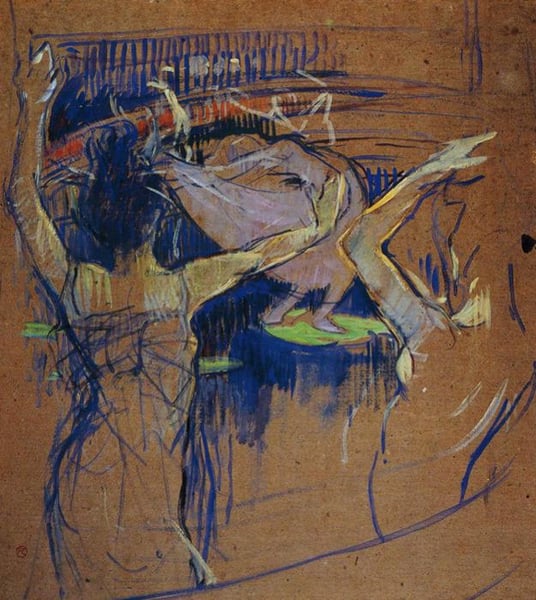
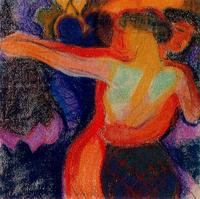
Henri de Toulouse-Lautrec’s "Ballet de Papa Chrysanthème" is a quintessential example of his mature style, merging the decorative elegance of Art Nouveau with the candid observation of genre painting. Created during the height of his career in late 19th-century Paris, the work captures the backstage world of the ballet—a subject that fueled his fame and defined his modern sensibility.
Significance within Art Nouveau: Toulouse-Lautrec applies the movement’s hallmark sinuous lines and flattened planes of color to a dynamic, theatrical scene. The composition likely emphasizes rhythmic, curving forms—perhaps in the dancers’ tutus or the stage drapery—that echo Art Nouveau’s organic vocabulary. Yet unlike many decorative pieces of the period, he uses these elements not for idealization but to heighten the energy and human imperfection of the performance. The bold, almost poster-like simplification of shapes anticipates his iconic lithographs and aligns with the style’s embrace of commercial art as fine art.
Significance as a genre painting: Rather than depicting a formal, polished ballet, Toulouse-Lautrec zeroes in on the informal, even gritty reality—the “backstage” or rehearsal moment implied by the title’s reference to “Papa Chrysanthème” (a popular comic ballet of the era). This intimate perspective was his signature: he celebrated the off-stage fatigue, gossip, and camaraderie of performers, elevating everyday theatrical life to high art. The work’s psychological depth—capturing fleeting gestures and subtle interactions—distinguishes it from mere documentation.
Modernist breakthrough: Toulouse-Lautrec bridges academic tradition and avant-garde innovation. His use of asymmetric cropping, unusual angles (influenced by Japanese prints and photography), and expressive, sometimes caricatural lines breaks with the illusionistic space of academic painting. In "Ballet de Papa Chrysanthème," he denies the viewer a single, heroic focus, instead dispersing attention across multiple figures—a radical move that aligns with the modern emphasis on subjective, fragmented experience.
Ultimately, this artwork is significant for its synthesis of Art Nouveau’s decorative fluidity with the raw, human immediacy of genre painting. It exemplifies how Toulouse-Lautrec transformed a popular entertainment motif into a vehicle for modernist expression, influencing poster art, ballet design, and the very way we see the performative body in motion.
Museum / Gallery
Genere
Stile
Visivamente simili
20 opere con composizione e palette affini
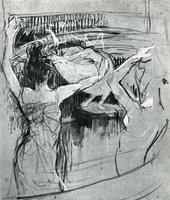
The Ballet Papa Chrysanth me
Henri de Toulouse-Lautrec
Three Dancers
Edgar Degas
Fairies´ Play
George Stefanescu
Dance
Marc Chagall
Mirror with Green
Dimitris Mytaras
Beauties' Fancy
Alice Bailly
Dancer and Audience
Ernst Ludwig Kirchner
Untitled
Ligia Macovei
Female Cabaret Dancer
Ernst Ludwig Kirchner
A dancer in a cabaret
Boris Kustodiev
Danseuses Du Cirque
Mikhail Larionov
Fresque
Rupert Bunny
Nude Figures in a Room
Alexandre Jacovleff
Tiller Girls
C. R. W. Nevinson
Figures at Night
Patrick Procktor
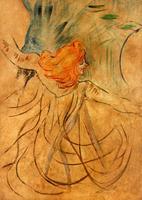
At the Music Hall Loie Fuller
Henri de Toulouse-Lautrec
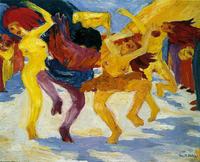
Dance Around the Golden Calf
Emil Nolde
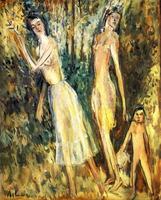
Spring
Mikhail Larionov
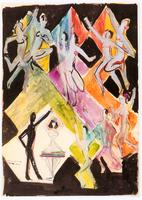
Design for the Wall Painting Colourful Dance
Ernst Ludwig Kirchner
Tango
Frantisek Kupka