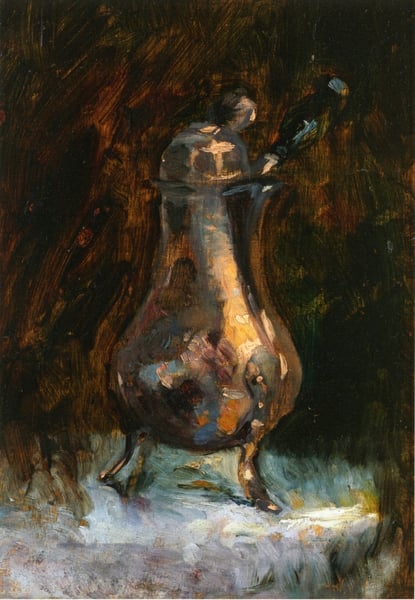
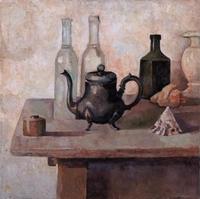
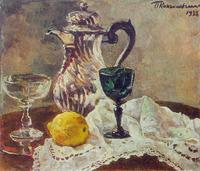
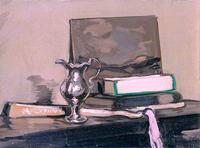
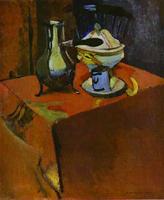
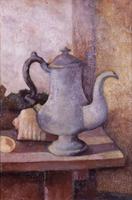
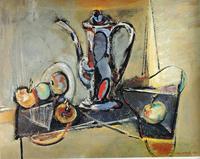
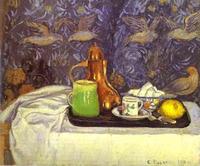
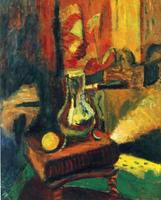
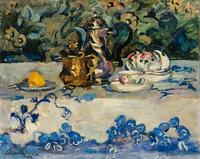
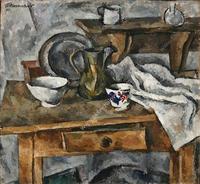
The significance of Henri de Toulouse-Lautrec’s Coffee Pot lies in the artist’s unexpected application of Post-Impressionist principles to the still-life genre. While Toulouse-Lautrec is most celebrated for his dynamic depictions of Montmartre’s cabaret life, this work demonstrates his mastery of the period’s formal innovations—simplified forms, bold outlines, and a candid, almost blunt handling of everyday subject matter. The coffee pot is stripped of anecdote or narrative, yet its compact, sculptural presence and the painter’s decisive use of color reflect the Post-Impressionist drive to express inner structure and emotional resonance through ordinary objects. Within Toulouse-Lautrec’s oeuvre, Coffee Pot stands as a quiet but powerful testament to his ability to distill the essence of a scene—even a still one—through the same unflinching eye and rigorous compositional sense that animates his more famous figures.