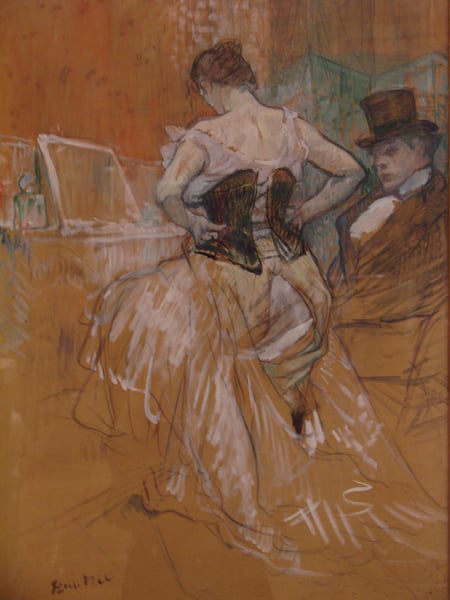
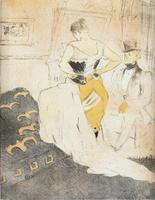
Henri de Toulouse-Lautrec’s Conquest of Passage exemplifies his distinctive fusion of Post-Impressionism and Art Nouveau within the genre painting tradition. As a chronicler of Montmartre’s nightlife, Lautrec transforms an ordinary moment of transit into a dynamic study of motion and modern life. The work’s significance lies in its masterful use of bold, sinuous outlines and flat areas of vivid color—hallmarks of Art Nouveau’s decorative elegance—combined with the psychological depth and expressive simplification characteristic of Post-Impressionism. By capturing a fleeting episode of passage, Lautrec elevates a mundane scene into a commentary on the restless energy of fin-de-siècle Paris, bridging the decorative and the observational in a way that redefines the possibilities of genre painting.